The government has delayed plans to introduce safety regulations for the estimated 63 per cent of construction products outside the existing regulatory regime. Its consultation response, published on 18 November, says regulations will be laid before parliament in 2027, with businesses given at least 12…
The new and updated Part L regulations of the Future Homes Standard place greater emphasis on energy efficiency, operational performance and low-carbon building services For architects, M&E consultants, and lighting designers, one of the most significant updates is the requirement for automated, zone-specific lighting controls to enhance energy efficiency. Under the new guidance, general lighting in non-domestic buildings must now also achieve a minimum efficacy of 105 lm/W for all except display lighting, raising the benchmark for compliant lighting schemes. Building lighting will need to become smarter under Part L The direction of travel under Part L regulations is clear. Future-proofed buildings require smarter, more efficient lighting systems that reduce energy consumption without compromising performance, comfort or flexibility. Lighting has long been recognised as one of the most effective ways to reduce building energy consumption.
Prime Minister Andy Burnham is being urged to give communities and local leaders a greater say over infrastructure projects by the Future Governance Forum (FGF) and the Institution of Civil Engineers (ICE).
Damage caused by floods in England could be 11 times higher in 100 years if investment in defences doesn't continue, according to a new Environment Agency assessment.
When it comes to improving competency in construction, are we starting in the right place? Gaynor Tennant, founder and chair of the Offsite Alliance and co-founder of ReThink Construction , takes a look We have spent years trying to improve competence across construction, introducing frameworks, qualifications and assessment processes so people can do their jobs properly. I wouldn’t dismiss any of it, particularly in an industry where getting things wrong can be devastating, but I’m increasingly convinced we’re starting in the wrong place. We seem to have accepted that enough competent individuals will add up to a capable industry. Experience tells me otherwise. I regularly see businesses offering services well beyond their competence, sometimes without appreciating the risks. At the other end of the scale, I see people so focused on the boundaries of their role that they no longer question what’s happening around them.
UK studio Waugh Thistleton Architects is set to transform the Edwardian Westbrook Pavilion in Margate, UK, into an arts centre for British artist Tracey Emin with a cafe, public sauna and changing rooms. "The project will bring a much-loved seafront building back into use, combining its original purpose with new spaces for art, culture and the local community," said Waugh Thistleton Architects . The studio recently won planning permission from the local council to convert the abandoned building, which Emin purchased in 2023, into a facility run by the Tracey Emin Foundation. The project aims to return the building to its former use as a changing room for swimmers and as a tea room, when it originally opened in 1914. "Originally opened in 1914, the building provided public changing facilities for sea-bathing and a tea room," said the studio.
Sebastian Chucas, offsite & modular key account manager, ROCKWOOL Core Solutions, explains why traditional practices need reform to meet the ever-changing regulations of the Building Safety Act, and why offsite construction could be the answer Since it was introduced in 2022 – in the wake of the Grenfell Tower tragedy – the Building Safety Act has redrawn the lines of accountability across UK construction. By 2027, its requirements are expected to become more exacting. For dutyholders, meeting the regulations is now only half the task; the other half is proving it. Throughout a project’s life, you must record who did what, where, and when, long before the first brick is laid. This is where the Golden Thread of information plays a critical role, tracking compliance from the start.
Global design and BIM software provider Vectorworks, Inc. has won Architectural Design Software of the Year for Vectorworks Architect at the 20 th Annual Construction Computing Awards “We’re thrilled to be recognised at the 2026 Construction Computing Awards,” said Luc Lefebvre, Vectorworks product marketing manager. “For the latest release of Vectorworks Architect, we focused on performance-driven visualisation, connected content, and intelligent documentation. Together, these features help architects and interior designers work faster and keep projects connected from concept to construction documents. It’s rewarding to see that work resonate with the designers who use Vectorworks every day.” The win comes off the heels of Vectorworks and its products, such as Morpholio Trace , being nominated for six awards.
Wates has started construction of a £59m leisure centre and civic offices complex in Swadlincote, Derbyshire. The scheme, designed by CPMG Architects, will replace the existing Green Bank Leisure Centre and council headquarters, freeing up both town centre sites for redevelopment. The new leisure complex will be built at the former Cadley colliery site at Cadley Park. It includes a 25m eight-lane swimming pool, separate learner pool, six-court sports hall, gym, fitness studios, café and community facilities. A new three-storey council headquarters will also provide open-plan offices and meeting rooms overlooking the surrounding parkland. Wates secured the job through the Procure Partnerships Framework East Midlands arrangement. The all-electric development will use air-source heat pumps and rooftop solar panels, with extensive glazing and timber features. The council expects construction to run through to the end of 2028, with the leisure centre opening first and the offices occupied shortly afterwards.
Kier has promoted Rebecca Boundy to its executive committee in a new group-wide role aimed at strengthening client relationships and driving growth. Boundy, currently managing director of clients and markets at Kier Construction, will become group clients and markets director from January 2027. She has spent the past decade in senior roles at Kier, building relationships with Government departments, combined authorities and local councils. The promotion is the latest move by chief executive Stuart Togwell to strengthen Kier’s leadership team and bring its construction and infrastructure businesses closer together. Togwell said: “Rebecca brings a powerful combination of customer insight, strategic relationship management and people-first leadership.” In a further management shake-up, group health, safety and wellbeing director Andrea Dolphin will report directly to Togwell from this month. The latest moves follow a string of senior appointments, including Tom Hinton, Niki Steel and Martin Staehr joining the group and executive committee.
AtkinsRéalis has been appointed to lead project management on the next stages of Cardiff Crossrail. As NEC4 Project Manager, AtkinsRéalis will act on behalf of the Cardiff council through the completion of design and the full construction stage of the initial phase. Graham is main contractor on the £100m job where work started this summer. AtkinsRéalis will manage the scheme’s risk, cost and delivery performance, review contractor programmes, provide strategic advice, coordinate works with rail operators and utility providers, and support stakeholder management – helping to deliver the scheme within a complex city environment. Phase 1a will help deliver the first direct light-rail link between Cardiff Central and Cardiff Bay, improving connections between the city centre, Butetown and the Bay, and is key to unlocking future cross-rail development phases and the wider South Wales Metro Network.
Big contractors and house builders have been rapped by the accounting watchdog for failing to spell out the financial risks hanging over their projects. The Financial Reporting Council (FRC) exposed shortcomings in how contractors report disputed payments, delay penalties and potential losses after examining the accounts of nine contractors and six house builders. But Balfour Beatty and Morgan Sindall earned praise for clearly explaining how they account for contract income, variations and financial risks. The watchdog highlighted Balfour Beatty’s disclosure of potential outcomes on a handful of long-term contracts ranging from a £82m gain to a £44m loss. Morgan Sindall was commended for explaining how it deals with contract variations, delay penalties and disputed payments when calculating revenue. Despite these examples of good practice, the FRC found that reporting of uncertain contract income across the sector generally fell short of expectations.
Willmott Dixon and Hochtief have teamed up with developer Cityheart to spearhead a major building programme across Cardiff University’s estate. The trio has landed a long-term development partnership to redevelop surplus university land and buildings, starting with a 665-bed student accommodation scheme at Talybont. The first project will see the former Brickyard Business Park in Gabalfa transformed into a six-storey student housing block. The 1.5-hectare site on Bevan Place has stood vacant since its industrial buildings were demolished in 2018. The bigger prize for the development partners is a substantial pipeline of work across the university’s wider estate. An investment prospectus published earlier this year identified around 6,000 student beds for redevelopment or refurbishment alongside opportunities across a 320,000 sq m academic estate. Further projects could include new teaching and research buildings, commercial space and mixed-use regeneration schemes.
Hundreds of subcontractors and suppliers were left holding unpaid invoices of nearly £5m when London and South East building contractor Helix Construct collapsed. The Newbury-based firm went into administration in September. The scale of its debts was outlined in an update at Companies House by administrator KR8 Advisory Limited. Helix also owed £2.3m to its banks and financiers and £260,000 in outstanding pay to its 35 staff. Latest accounts showed the business has been under growing cash and profitability pressure, while auditors also raised concerns over the valuation and profit recognition on several contracts. For the 18 months to June 2025, turnover reached £40m compared with £21m in the previous 12-month financial year. The firm had been in business since 2017 specialising in design and build construction for affordable housing, education, care and commercial projects across London and the south of England.
Rail freight is expected to carry up to 170,000t of excavated material from the HS2 station site at Euston avoiding more than 10,000 heavy goods vehicle (HGV) journeys on roads in London.
A single-use earplug crafted from seaweed , two plant-based insulation materials and a homegrown timber kit-of-parts for low-rise buildings are among the projects that have been awarded Design Museum grants. UK-based studios Searo Labs , WeCanMake , Local Works Studio and SY Ecofit have been granted a share of £280,000 from the Design Museum for their "cutting-edge" environmental prototypes. Described as the "world's first seaweed-based single-use earplug", SearoSoft by Cambridge-based Searo Labs is a fully biodegradable and renewable alternative to single-use earplugs. According to SearoSoft, the soft, mouldable earplugs are made without microplastics or chemicals and designed to hydrate the ear canal, unlike plastic -based products, which can be drying. Once discarded, they are biodegradable in water or soil after 30 days. As seaweed is a regenerative crop, SearoSoft explained that there is no need for land, freshwater or fertilisers, making the process simple and more sustainable.
In this interview, Kerstin Thompson shares how her practice approached the repair and remaking of a Robin Boyd-designed motel on New South Wales’ Sapphire Coast, working with collaborators Finding Infinity, Openwork and Wilderness Building Co.
Hertfordshire-based contractor Ashe Group has weathered a £23m drop in turnover while keeping pre-tax profit above £7m. The family-owned business saw revenue fall 22% from £106m to £83m in last year as new-build opportunities dried up. But a selective approach to bidding helped protect profitability, with pre-tax profit coming in at £7.1m against £8.9m the previous year and operating margins improving from 6.9% to 7.3%. The Hitchin-based group, led by chief executive Robin Blake, blamed weaker construction activity and falling business confidence for the revenue setback. While demand for new-build projects fell, refurbishment work, particularly in health and defence, remained strong, prompting the contractor to shift its focus towards these markets. This edged its year-end order book from £60m to £64m. The group said: “The end of year order book is positive and should lead to an increase in group revenue in 2026.”
Kier has promoted Rebecca Boundy to the newly created role of group clients and markets director, with a place on its executive committee from January 2027. Boundy is currently managing director of clients and markets in Kier's construction division, a position she took up in…
HS2 is using rail freight to remove 170,000 tonnes of excavated material from Euston, avoiding more than 10,000 HGV journeys on London’s roads On Monday (16 November), Rail Minister Lord Hendy visited the site to see how the operation is supporting construction of the new HS2 station. The bulk excavation is now underway, with the site being dug to around seven metres to make way for the new platforms. Material is being transported by train from a new loading facility alongside Euston’s disused Track 17 to Forders Sidings in Bedfordshire, where it will be reused at the Stewartby Brickworks development. Successful trials between February and September 2026 moved around 35,000 tonnes of material. A further 135,000 tonnes is expected to be transported over the next ten months, with up to two trains a day operated by GB Railfreight.
Jacobs has been added as a key supply partner to a joint venture between VolkerFitzpatrick and VolkerStevin, securing a place on Anglian Water’s Major Projects Framework.
Entries are now open for the first New Civil Engineer (NCE) Floods & Water Awards, with 21 categories covering projects, innovation and impact, and organisation and contribution.
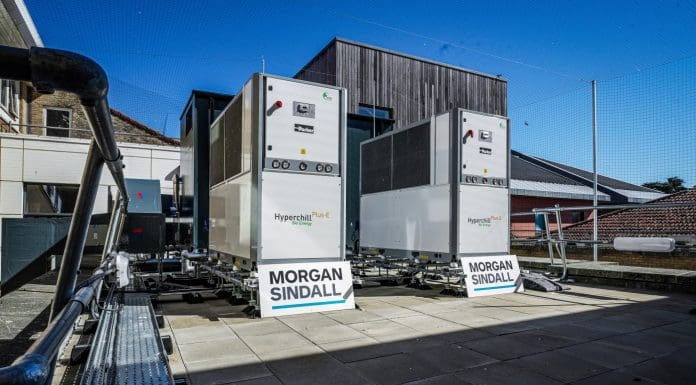
Morgan Sindall Construction’s Southern Home Counties business has completed a £2.8m project to upgrade critical heating, ventilation and air conditioning (HVAC) infrastructure serving the MRI suite at Worthing Hospital Appointed by University Hospitals Sussex NHS Foundation Trust through the Pagabo framework, Morgan Sindall delivered the full design and construction of a new dedicated air handling unit (AHU) and associated plant to support the hospital’s MRI and radiology services. Upgrading critical hospital infrastructure The scheme included a new air handling unit, replacement MRI chiller, reconfiguration of the Intervention Unit’s chiller plant, a new humidifier and two new chillers. Major plant equipment was craned onto the hospital roof, alongside the installation of new ductwork, pipework, building controls and local air conditioning units. The upgraded infrastructure provides improved environmental control and operational reliability, helping to reduce equipment downtime and the risk of postponed appointments.
The government has rejected calls for buildings undergoing cladding remediation to meet the same restrictions on combustible external-wall materials as new developments. At a public bill committee sitting on the morning of 17 November, Liberal Democrat MP Gideon Amos proposed an amendment to the Building…
NHS Forth Valley has said it has “no plans” to begin legal proceedings against Portakabin over delays to an £11m hospital ward build, despite taking legal advice. The 30-bed modular ward at Forth Valley Royal Hospital in Larbert, Falkirk, remains unopened more than four years…
Caroline Compton-James is deputy chief executive of Scape If you’ve been keeping up with Andy Burnham’s social media, you will have seen that he had a busy start as prime minister. In support of his wider agenda built on devolution, local decision-making and delivering good…
Cardiff Council has appointed AtkinsRéalis to manage the design completion and construction of the first phase of Cardiff Crossrail, the planned tramway linking Cardiff city centre with Cardiff Bay.
Skanska has completed and tested a prototype concrete pedestal intended for use in Rolls-Royce's small modular reactor (SMR) power plant, as construction methods for its proposed factory-built stations are being developed.
Discover how housing asset teams can diagnose recurrent damp and mould by investigating moisture sources, surface humidity, thermal performance and ventilation Repeated mould treatment can leave the moisture mechanism unresolved. Housing asset teams need investigations that distinguish water ingress, surface humidity, and ventilation performance before commissioning permanent remedial works. Recurrent mould following remedial work should prompt an asset manager to review the original diagnosis, specification and evidence of completion. The treatment may have been delivered correctly while leaving the conditions responsible for growth substantially unchanged. The commercial consequence is a repeat instruction against the same asset, often with limited information about why the previous intervention failed. The technical consequence is more serious: a surface condition may be treated repeatedly without establishing the moisture source, transport route or environmental conditions sustaining it. A competent investigation needs to separate these mechanisms and assess their interaction.
London studio ConForm Architects has transformed a former cattle barn into a multifunctional space for a working farm in the Cotswolds , contrasting its original red-brick and timber structure with zinc and black-timber additions. Named Open Byre, the 124-square-metre barn has been adapted into a flexible space for meetings and gatherings, with the first floor containing a standalone apartment for guests. Drawings and photography Previous Next Drawings and photography Close ConForm Architects ' design responds to the dual nature of the barn's surroundings – with traditional red-brick farm structures to the east and more contemporary agricultural barns to the east – combining restoration with a new contrasting palette of stone, metal and timber. "The design centres on a dialogue between old and new. Rather than blending the interventions into the existing fabric, we wanted each to remain legible and reinforce the other," studio partner Ben Edgley told Dezeen.
Marshalls has kept its full-year profit outlook in line with market expectations, although weaker housebuilding has weighed on its building products division. The building products manufacturer reported revenue of £544m for the ten months to 31 October, down 0.3 per cent year on year on…
Ashe Group has said an “unstable geopolitical environment” contributed to a 22 per cent drop in its revenue. The Hertfordshire-based group’s latest audited accounts show turnover fell from £106m to £83m in the year to 31 December 2025. Pre-tax profit decreased from £9m to £7m,…
Coventry City Council has launched market engagement for a £100m scheme to strengthen an ageing ring road viaduct it warns may otherwise need weight restrictions or closure. The project will reinforce 61 concrete support trestles beneath the Swanswell Viaduct, which carries an estimated 41,000 vehicles…
Dr Carla Toro, Warwick Medical School, University of Warwick, explores how the construction industry can tackle the root causes of poor mental health through a more preventative, supply-chain-wide approach Mental health has become a major priority for UK construction, with national charities playing a vital role in tackling stigma and encouraging workers to seek support. While these efforts remain essential, preventing mental health harm requires us to confront a fundamental question: what if the working conditions affecting people’s mental health are largely beyond their control, or even that of their employer? Consider a subcontractor working to an unrealistic project deadline. Its workers may face long hours, additional weekend shifts, and pressure to complete tasks at short notice. The worker’s employer may recognise the risks but have limited influence over the programme or resources available. Or consider a small construction business waiting for payment from a larger contractor.
Birmingham City Council has more than doubled the estimated value of its proposed construction works framework to £3.23bn, up from £1.54bn. The increase of £1.69bn came as the council revised its procurement plans, extending the proposed framework from four years to seven and a half…
Proposals in today’s Milburn Review include reducing employers’ National Insurance contributions for young workers and doubling the number achieving an apprenticeship over the next decade Alan Milburn’s long-awaited review into youth unemployment and welfare reforms also recommends making “explicit” youth hiring commitments mandatory for public projects above £50m, as well as major contracts in infrastructure, energy and defence. The report was commissioned by the government to tackle rising numbers of young people not in education, employment or training (NEETs). The construction industry has welcomed the report’s recommendations, as they could help tackle two major national challenges at once: rising youth unemployment and the ongoing skills shortage across the UK construction and trade sectors. PBC Today details some of these reactions below.
Plans to approximately double the international passenger processing capacity of St Pancras International have moved into their next design phase following the completion of initial design work.
Construction of a new overbridge on HS2’s route near Bickenhill has reached the halfway mark, with the first section of the structure completed after 11 months of work.
Most organisations hold building information they cannot confidently act on. The full Asset Intelligence framework is now open to anyone who wants to read it, use it and build on it Asset Intelligence is the discipline that ensures the people responsible for buildings can find, trust and act on the information they need to keep them safe, compliant and performing. Glider created the discipline and introduced it in these pages in June. Last time I looked at where it starts on site. This time the subject is the framework itself. Why we created Asset Intelligence The standards already existed. ISO 19650 and ISO 55001 describe what good looks like, yet neither has been adopted at scale across the whole lifecycle. The industry does not lack knowledge of what good asset information looks like. It lacks a discipline to deliver it. As I see it, the problem had no home.
Designer Y uri Suzuki drew on his childhood fascination with amusement parks for the Onomatopia exhibition, which features playful dioramas with their own soundtracks and shows how theme parks "bring together architecture, sound, movement and human experience". On show at the Osh Gallery in London's Angel neighbourhood, the exhibition features five models, a short film and reference materials from Suzuki's own archive. Photographs Previous Next Photographs Close The dioramas – a Ferris wheel, rollercoaster, helter-skelter, dodgems and carousel – resemble some of Suzuki 's earlier work, such as the interactive Sonic Bloom installation in London . "The ideas have existed in my sketchbooks for the last couple of years and have gradually developed through a series of my public art projects," Suzuki told Dezeen. "I've always been interested in expanding the scale of my sound sculptures, imagining how they might eventually become architectural structures or even full-scale amusement park rides."
FSi Promat has supported the redevelopment of Tolworth Hospital, a major £110m investment by South West London and St George’s Mental Health NHS Trust to build a new five-ward hospital building The new hospital building will provide modern accommodation for mental health service users, relocating from older facilities at Springfield Hospital. The new building forms part of the trust’s Better Environments Programme, which aims to transform its mental health estates and create improved environments for service users and staff. Working alongside main contractor Sir Robert McAlpine, FSi Promat collaborated with Britplas to provide early-stage technical support for the fire protection of the building’s complex façade , helping to ensure the fire protection strategy was considered as part of the wider façade design from the outset, rather than retrospectively.
A construction project’s exposure extends across consultants, contractors, cloud services and connected equipment. Resilience depends on knowing which activities rely on those connections and how work can continue safely when they fail An inaccessible project platform creates questions that reach well beyond the IT helpdesk. Which drawings can the site team rely on? Can inspections proceed? Who can authorise a change, and how will the resulting records be reconciled when service returns? A cyber incident may affect the confidentiality, accuracy, or availability of information. Those consequences demand different responses. A file that opens successfully can still be untrustworthy if an attacker or compromised account has changed its contents. Construction teams should therefore define cyber resilience around the decisions and activities that digital systems support. The relevant unit is often the project, whose information crosses several organisations, rather than a single company’s network.
Developer Henley Investment Management and investment partner Sixth Street have lodged plans to demolish Birmingham’s ageing Martineau Place shopping centre to make way for four major buildings, including what could become the city’s tallest skyscraper. The ambitious redevelopment would see the 1960s shopping complex replaced by buildings rising to 14, 20, 42 and 56 storeys. The tallest 324m residential tower would overtake the city’s current skyscraper landmarks, the 51-storey One Eastside and 49-storey Octagon, both completed last year. The EPR Architects-designed scheme would deliver 1,300 homes alongside around 25,000 sq m of office and commercial floorspace, with shops, restaurants and leisure uses at ground level.
Specialist Slipform Engineering has unveiled plans for a new factory at Kishorn in the Scottish Highlands capable of producing up to 36 concrete floating offshore wind foundations a year. Each foundation would weigh around 20,000 tonnes and be built using slipform techniques and a specially designed gantry system before being transferred directly into the water. Plans for the Slip4Wind are backed by the National Manufacturing Institute Scotland (NMIS) and the Offshore Wind Growth Partnership (OWGP). Eamon Hanley, founder and managing director at Slipform Engineering, said: “Floating offshore wind presents a significant opportunity for UK manufacturing, but producing these foundations at the scale required means finding ways to make the process more efficient and commercially viable.
Birmingham City Council is preparing a £3.23bn contractor bid race in a major shake-up of how it delivers public building works. The council has more than doubled the value of its original £1.54bn framework plan and extended the deal from four years to seven-and-a-half years in a shake-up designed to widen competition with more local firms and improve delivery. The revamped framework will cover new build, housing, refurbishment, building safety, demolition and specialist works, with contractors expected to be invited to bid in January 2027. Birmingham is also ditching its original closed framework model in favour of an open arrangement, giving new contractors the chance to join the line-up when competition reopens after three years. The overhaul follows market engagement and a review of the council’s planned capital spending and procurement strategy.
Coventry City Council is calling up major civils contractors for a £100m rescue of an ageing city centre viaduct that could face closure without urgent strengthening works. The council has launched market engagement for a major structural overhaul of Swanswell Viaduct, which carries around 41,000 vehicles a day on the city’s ring road. The job will involve strengthening 61 concrete support trestles with additional steel reinforcement and concrete, alongside replacing ageing structural bearings. Engineers have identified extensive concrete spalling, reinforcement corrosion and structural weaknesses in the original 1960s design. The council warns that without intervention, severe weight restrictions, lane closures or potentially complete closure could be needed by 2030. The 118-span viaduct stretches for around three-quarters of a mile between junctions 1 and 4, forming a third of Coventry’s ring road.
The Building Safety Levy now applies to new residential schemes in England. James Metcalfe of ProcurePro looks at where the cost goes once it leaves the developer’s desk, and how better procurement data helps commercial teams price it openly Do you know your levy exposure, and if not, why not? As of 1 October 2026 , any building control application or initial notice for new homes or purpose-built student accommodation in England can attract the charge, and over a decade the government expects it to raise around £3.4bn to fund building safety work. On paper, the bill belongs to the client named on the application, which is usually the developer. In practice, how much it costs along the way depends on who can see it coming.
Plant and tool hire specialist Speedy Hire has posted another loss in its latest interim results. Pre-tax losses were £9.8m for the six months to September 30 2026 from £15.1m last time as turnover hit £211.6m from £205.2m. The firm’s last full-year results showed revenue flat at £416.1m for the year to March 31 2026 as pre-tax losses deepened to £32.3m from £1.5m last time. Bosses are hopeful of better times ahead after the company’s “Velocity” growth strategy has “transformed Speedy Hire into a fundamentally stronger and higher quality business.” Dan Evans, Chief Executive, said: “We are pleased with the strategic and operational progress we have made, delivering growth and gaining market share in a subdued market. “Our Velocity strategy has transformed Speedy Hire into a fundamentally stronger and higher quality business.