Major infrastructure projects worth more than £50M should be required to include explicit commitments to recruiting young people under proposals in an independent review aimed at tackling the UK’s growing youth unemployment crisis.
Three hundred people were evacuated from surrounding properties and two local schools closed after a gas main was ruptured during construction work in north London on Monday. The incident happened at Curlew House in Enfield which is part of the Alma Estate Regeneration scheme being led by the local council and Countryside Partnerships. The London Fire Brigade said: “On 16 November, a 12 inch gas main was ruptured as a result of construction work. Around 300 people have evacuated from the surrounding residential properties as a precaution. “On 17 November, the decision was taken to close two schools in the local area by their directors, whilst the incident is ongoing. “Crews are continuing to support the gas authority as they work to resolve the incident.” The main demolition contractor on the site has now launched an investigation into the incudent.
With many places across the UK experiencing sub-zero temperatures in the past week, following a summer of multiple heatwaves, it’s vital to consider the type of insulation used on new builds and retrofits, says pan-European specialist Actis The past few days have seen temperatures of minus 5C in some areas, as well as wind gusts of more than 50mph in Scotland. “While traditionally the purpose of insulation has been to keep the heat in during this sort of weather, this approach can backfire when temperatures rise in the summer ,” explained Actis UK and Ireland technical manager Harsha Mistry. “An exceptional U-value is obviously on the wishlist for any insulation specifier, with our products well-known for their thermal performance, airtightness and ability to counteract thermal bridging.
A joint letter sent to chancellor John Healey on behalf of the newly formed UK Nuclear Industry CEO Forum, and signed by Office for Nuclear Regulation (ONR) chief executive and chief nuclear inspector Mike Finnerty, has made a former nuclear chief inspector “very uncomfortable”.
Delays to parliamentary debates on restoring the Palace of Westminster are adding hundreds of millions of pounds to the proposed programme’s cost, officials have warned. The parliamentary clerks were responding to a public accounts committee (PAC) report on the Restoration and Renewal Programme (R&R). Two…
Kris Gallagher (pictured left) is head of HR and Angela Jones is social value manager at retrofit contractor Sustainable Building Services (UK) There is a version of the skills-gap conversation that treats the problem as one of supply. It implies that the right training scheme…
Nuclear Restoration Services (NRS) has awarded Costain a multimillion-pound contract to design and install a replacement pipeline at Hunterston B nuclear power station as part of efforts to decommission the legacy plant.
North London Waste Authority (NLWA) is proposing to increase the contract price for its new Edmonton Energy Recovery Facility (ERF) by approximately £451M, following a series of disputes with contractor Acciona Industrial.
The Future Homes Standard is set to come into force in England, subject to transitional arrangements, on 24 March 2027 and is designed to improve energy efficiency in new build homes While the new regulations place greater emphasis on airtightness and thermal efficiency, how can the need for thermal performance be balanced with resident comfort, particularly in the ‘heatwave climate’ that is now not occasional, but the new normal? Donald Matheson, head of technical and innovation at Saint-Gobain Solutions, and Brian Mackintosh, head of technical and compliance for Pasquill, discuss what it truly means to create a comfortable home beyond simply meeting the standard’s requirements. What will the Future Homes Standard address? The Future Homes Standard will primarily address reducing carbon emissions, improving energy efficiency, and installing low-carbon heating in new homes in England.
Connecticut College and Housing Collective’s Center for Housing Opportunity Eastern Connecticut opened We Live Here/New London, an exhibition grounded in public research and dialogue around living affordability and security. Future Expansion, a Brooklyn office, was behind exhibition design. The show takes place in New London’s Garde Gallery on State Street. The exhibition is part of
The two-storey rebuild of Becket Primary School has been completed and handed over by Tilbury Douglas The Becket Primary School rebuild was delivered on behalf of the Department for Education and comprises a new two-storey, one-form-entry primary school with new car park facilities, replacing the existing building . The facility provides a high-quality teaching and learning environment, with modern classrooms, specialist spaces and support areas. Chris Loach, regional director – East Midlands at Tilbury Douglas, commented: “We are proud to have delivered this modern, sustainable new primary school in time for the new academic year.” Sustainability was incorporated into the Becket Primary School rebuild Sustainable design principles were embedded throughout the whole rebuild, including installing air source heat pumps to provide low-carbon heating and improve the building’s environmental performance.
A digital record becomes useful when it connects a building decision to its evidence, authorisation and physical outcome. For higher-risk buildings in England, that connection needs to survive changes of product, contractor and owner A contractor proposes an alternative product because the specified item is unavailable. The design team exchanges emails, a revised drawing appears in the common data environment, and the replacement reaches site. Months later, someone asks which assessment supported the substitution, whether installation followed its conditions and who authorised the change. Finding the drawing answers only part of the question. The important record is the connection between the original requirement, the proposed alteration and the evidence supporting the completed work. This is a useful way to examine the golden thread. A project may hold thousands of documents while leaving important decisions difficult to reconstruct. Equally, an orderly record can contain unresolved technical questions.
Jordan Wheat, industry practice director at Crimson, explores how better use of operational data could help housebuilders tackle recurring defects and improve construction quality For homeowners, moving into a new-build property should mark the start of an exciting new chapter. But when problems emerge after completion, the experience can quickly become frustrating. For housebuilders, the challenge extends beyond resolving individual complaints. Recurring defects can lead to repeated remedial work, increased costs and damage to customer relationships. This is particularly important at a time when housebuilders are already facing significant financial and operational pressures, from rising costs to shortages of skilled labour. The Home Builders Federation’s (HBF) Viability Crunch report, published in May 2026, estimates, for example, that additional policy costs, taxation and inflation have added approximately £76,000 to the cost of delivering a new home since 2020.
Ground Construction Ltd (GCL) is set to deliver the next phase of works at West One shopping centre in London’s West End. GCL will be carrying-out piling, groundworks and construction of a new concrete core before handing over to the structural steelwork contractor. The work is part of an £8m package of demolition and enabling works for main contractor McLaren. GCL sister company Demolition Contracting UK (DCUK) is currently completing demolition works on the site which sits directly above the operational Bond Street station. Michael Greene, Deputy Managing Director, GCL, said: “West One is exactly the type of project where early coordination between the demolition, engineering and construction teams makes a real difference. “Our involvement isn’t simply beginning when the demolition finishes.
Construction does not need more data. It needs to make better use of what it already has, argues Dr Danny Murguia of the Cambridge Laing O’Rourke Centre at the University of Cambridge Construction organisations have spent years investing in digital tools. Projects now generate enormous volumes of information through programmes, BIM models, progress monitoring tools, labour systems, site images, sensors, delivery records and digital reports. Yet a surprisingly basic question remains difficult to answer: how productive is this project, and what does good actually look like? This was the starting point for our research at the University of Cambridge in 2021. What we found was not a shortage of data. The problem was fragmentation. Information sat in different systems, was owned by different teams and was recorded at different levels of granularity.
The Nemetschek Group celebrated another successful evening at the Construction Computing Awards in London Bluebeam, Graphisoft and Vectorworks won three awards, while ALLPLAN, Graphisoft and Vectorworks also secured four runner-up positions, recognising the brands’ contributions to innovation, architectural design, BIM and structural engineering. Affectionately known as “The Hammers,” the renowned Construction Computing Awards recognise technologies, tools and solutions for the design, construction, maintenance and modification of buildings and civil engineering projects of all sizes. The 20th edition took place on November 12, 2026, at the Leonardo Royal Hotel in London, with winners selected through readers’ online voting and a judging panel’s deliberations. Bluebeam won “Innovation of the Year 2026” for its entry “Cutting Manual Work From Construction With Bluebeam Max.” ALLPLAN secured the runner-up position in the same category for its SteelGenie Structural Steel Estimating Platform.
Silvertown Homes has landed a £2.7bn development deal with the Greater London Authority to kick-start a vast 5,000-home regeneration scheme in London’s Royal Docks. The 30-year deal clears the way for UAE property giant Arada to press ahead with the long-stalled Thameside West development on a 47-acre waterfront site in east London. The GLA has handed Arada-backed Silvertown Homes the deal without competition because of its existing land ownership and development rights across the site. The agreement will bring together publicly and privately owned land to unlock one of the capital’s biggest remaining regeneration opportunities. Arada stepped in to revive the project last year, taking a minority stake in Silvertown Homes’ parent company, Keystone Silvertown. The Dubai-based developer is expected to take majority control in 2027, paving the way for Silvertown Homes to become the approved developer for almost the entire masterplan.
Utilities contractor Future Networks Solutions Ltd has filed a notice of intention to appoint an administrator. The cabling specialist is based in Leeds and has been in business since 2007. Latest accounts for the company for the year to June 29 2024 show it employed more than 100 people. Data and credit checking specialist Red Flag Alert highlighted the firms’ administration notice with its regular checks of high court construction insolvency applications.Subscribers to the Red Flag Alert service benefit from early warnings about the financial health of companies to help them avoid bad debts. The Enquirer has linked-up with Red Flag Alert to offer readers a discount on its services and help you avoid worthless invoices from insolvent companies. For more information and to benefit from the Enquirer discount visit Red Flag Alert .
Rochdale’s landmark Seven Sisters towers blocks have been earmarked for demolition and replacement by 600 new homes. The decision by social landlord Rochdale Boroughwide Housing (RBH) follows years of uncertainty over the seven towers which were built in the 1960s. Residents began moving out of the College Bank site last year following safety concerns. Amanda Newton, RBH Chief Executive, said: “Today marks an important step forward for College Bank and for the future of housing in Rochdale. “This decision gives us a way forward together and allows us to focus on the opportunities ahead. This includes creating hundreds of new, safe, affordable homes on the site that meet Rochdale’s current and future housing needs, while continuing to support our existing customers every step of the way.” Only 78 households out of the 766 flats across the seven blocks have yet to accept an offer for a new home.
Private equity firm Endless has acquired loss-making house builder Weston Homes in a buyout that brings an end to nearly 40 years of founder-led ownership. The Leeds-based investment firm is injecting fresh funding into the Essex-based house builder, which has racked up accumulated losses of more than £36m over the past three years. Its ambitious move into automated offsite manufacturing through British Offsite has proved costly, with the business continuing to rack up losses despite heavy investment in robotic production facilities. Since being established four years ago British Offsite alone reported accumulated losses of around £43m. Under the buyout newly-formed acquisition vehicle Project East Bidco, now controls at least 75% of parent company Weston Group.
British cement manufacturers are facing a growing flood of imports as overseas suppliers divert shipments away from Europe to dodge new carbon taxes. New analysis by the Mineral Products Association (MPA) reveals that the share of UK cement imports coming from outside Europe has hit its highest level since records began in 2000. Non-EU countries accounted for 29% of UK cement imports in the first nine months of 2026, compared with just 17% over the same period last year. The sharp rise follows the introduction of the EU’s Carbon Border Adjustment Mechanism (CBAM) in January, which places a carbon price on emissions-intensive imports including cement. The MPA believes the new rules are pushing overseas suppliers to switch shipments to Britain, where equivalent carbon border taxes will not come into force until January 2027.
Dezeen has announced the six winners of Dezeen Awards 2026 Designers of the Year at this evening's ceremony in London, which include Lina Ghotmeh, Keiji Ashizawa and Yinka Ilori . Our Designers of the Year awards recognise the best emerging and established talent whose innovative work has made a notable impact on the industry across architecture, interiors and design. This year, Ghotmeh took home the architect of the year award, while studio duo Shohei Kuma and Elsa Escobedo were named emerging architect of the year. Interior designer of the year was awarded to Tokyo-based Ashizawa, and Australian designer Yasmine Ghoniem was named emerging interior designer of the year. London-based Ilori won designer of the year with Stockholm-based Simon Skinner named emerging designer of the year.
A tree-top sauna that punctures its architectural framework with the surrounding woodland has been named Dezeen Awards 2026 architecture project of the year following the announcement of all 19 architecture category winners at a party in London. The 19 winners awarded at the ninth annual Dezeen Awards ceremony are located in 11 different countries, including Canada , France , India , Japan and Mexico . Daichi Silent River Tree Sauna won the project of the year award in the architecture sector, it was also named leisure and wellness project of the year. Leisure and wellness projects win big again The judges hailed the biophilic project as "beautifully minimalist with a spiritual touch of the soul". "It's totally fresh, totally innovative, and never seen before," they added.
An old sailor's home that pays homage to its nautical heritage has won Dezeen Awards 2026 interiors project of the year following the announcement of all 14 interiors category winners at a party in London. The 14 winners awarded in Dezeen’s annual awards programme are located in 10 different countries, including Australia , China , Czech Republic , Kazakhstan , Mexico and Ukraine . La Casa del Pirata by Raul Sanchez Architects won the interiors project of the year award, sponsored by Gaggenau . It was also named residential interior (small) project of the year. "This was probably the boldest and most well-executed project we saw," said the judges. "They kept everything that was already there and made a much more interesting place," adding that, "it's very well-thought-out in terms of how space has been used."
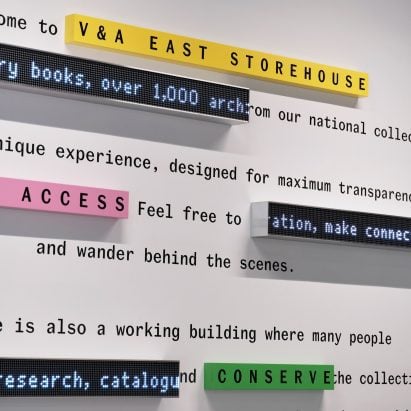
The wayfinding scheme for London 's V&A East Storehouse has won Dezeen Awards 2026 design project of the year following the announcement of all 16 design category winners at a party in London. The 16 winners awarded in Dezeen's annual awards programme include designs by Laurids Gallée and John Tree, as well as Foster + Partners and Kettal. Fieldwork Facility's graphic identity for the V&A East Storehouse experience won the design project of the year award and was also named graphic design of the year. Design project of the year unveiled V&A East Storehouse by Fieldwork Facility Previous Next The master jury cited the project as a "sophisticated wayfinding scheme that demonstrates how signage can do far more than direct: it can define identity, shape experience and establish a sense of place".
Northern Trains Limited has launched a £306.5m Design & Construction Framework covering station improvements, depot facilities and railway infrastructure projects across its network Seven lots offer opportunities for contractors Published on 13 November 2026, the procurement is divided into seven lots, providing opportunities for contractors and specialist suppliers across a range of construction and engineering disciplines. The packages cover: Internal building fit-outs – £25.8m Access and component movement solutions – £9.9m Specialist train servicing and maintenance facilities – £33.1m Multidisciplinary railway projects up to £1m – £21.2m Multidisciplinary railway projects above £1m – £152.3m Information and security systems – £15m Accessible station enhancements – £49.2m The scope includes civil engineering, building works, mechanical and electrical installations, track, electrification, signalling, telecommunications, depot equipment and station accessibility improvements. Dedicated opportunity for SMEs The £21.2m package for multidisciplinary projects up to £1m is reserved for small and medium-sized enterprises (SMEs).
Selecting a construction approach starts with the building, the site and the delivery constraints. A useful comparison identifies which work benefits from factory production and which decisions remain project-specific A developer considering modern methods of construction has more than one choice to make. Three-dimensional modules, two-dimensional panels, preassembled components and combinations of factory and site work offer different ways to organise delivery. The most appropriate approach depends on what is being built and how the project can be designed, manufactured and assembled. Starting with a preferred label can narrow the options too early. The first task is to establish which parts of the building repeat, which interfaces are difficult and which site constraints will shape the programme. Modular construction sits within a wider framework The government’s 2019 MMC definition framework identifies seven categories.
Sustainable drainage continues to depend on inspection, access and responsible management after construction. A useful handover makes those requirements clear for the people who will operate the assets A sustainable drainage system is handed over as a set of physical assets that must keep performing in a changing environment. Inlets can become obstructed, vegetation develops, sediment accumulates and adjacent land use can change. The maintenance plan needs to explain how those conditions will be observed and managed. The practical question is whether the receiving organisation can identify the assets, understand their function and carry out the required work. A generic schedule without locations, access arrangements or responsibility leaves that question unanswered. Explain what the system is intended to do The handover should connect drawings and asset records with an accessible account of the drainage design.
The Building Controls Industry Association (BCIA) has announced Stan Thomas as the incoming chair and Freddy Kudom as the incoming vice chair of its Young Engineers Network (YEN), with both taking up their roles in January 2027 The appointments bring together two passionate industry professionals committed to developing young talent , strengthening industry connections and creating more opportunities for the next generation of building controls engineers. Stan, who has served as YEN vice chair since January 2025, will succeed outgoing chair Josh Steel, while Freddy will take on the vice chair position before progressing to chair in January 2029. Aimed at professionals under the age of 35 working in technical roles within the building energy management systems (BEMS) industry within BCIA member companies. BCIA’s YEN provides opportunities for learning, networking and peer-to-peer support, helping young engineers develop their skills and build connections across the sector.
Construction firms should review their labour supply chains following the government’s major Right to Work shake-up, writes Mandeep Khroud, head of immigration at law firm Irwin Mitchell On 1 October, the government introduced one of the biggest changes to illegal working compliance since Right to Work checks were first introduced, representing a fundamental shift in how Right to Work compliance is assessed. For construction businesses, many of which rely heavily on subcontractors, labour supply chains and flexible workforce arrangements, the reforms have significant implications, drastically expanding immigration compliance beyond traditional employees, apprentices and specific worker contracts. As a result, it is vital that those operating in the construction sector understand precisely how labour enters their business, where legal responsibility sits and whether existing compliance processes remain fit for purpose.
With the latest NHS estates figures putting backlog maintenance at £17.3bn, Hades Group managing director Mike Brooksbank argues that better use of agile contractors and efficient purchasing routes can help shorten the distance between approved work and completed work “Mind the gap” is a familiar phrase for a business with its roots in rail. This year it is also the theme of Healthcare Estates 2026 , framing the risk of a two-tier NHS estate: new, digitally enabled facilities on one side; ageing infrastructure on the other. There is another gap worth looking at. It sits between work that is already known, often already funded, and the point at which somebody actually gets on site and does it. That gap costs money. The latest NHS Estates Returns Information Collection , published in October 2026, puts NHS backlog maintenance at £17.3bn, up from £15.9bn the previous year.
Glenigan’s latest forecast signals a welcome return to growth for UK construction – but are contractors and their supply chains ready to capitalise on the opportunities ahead? The outlook for UK construction is improving, with Glenigan forecasting a 13% recovery in industry output between 2025 and 2028. Following a challenging 2026, growth is expected to accelerate in 2027, driven by investment in education, healthcare, civil engineering and infrastructure. At our recent away day at Mercedes-Benz World , Allan Wilén, economics director at Glenigan, shared insights from the Summer 2026–2028 Construction Industry Forecast , highlighting the sectors set to lead the recovery and the opportunities ahead. But increased construction activity also means more payment applications, tighter deadlines and greater pressure on cashflow. For contractors and their supply chains, having efficient, transparent payment processes in place will be essential to managing growth and maintaining strong commercial relationships.
Spanish contractor Acciona has secured a £451m increase on its troubled north London waste-to-energy contract following a major claims battle with North London Waste Authority. The deal to build the new Energy Recovery Facility at Edmonton EcoPark has jumped from £799m when it was signed in January 2022 to £1.25bn under a settlement aimed at getting the delayed project back on track. The 56% increase comes after Acciona submitted claims totalling £572m linked to delays, changes to the works and disputes over employment conditions. The settlement also pushes contractual completion back to December 2029, more than three years later than the original September 2026 handover date. A council report reveals that Acciona had previously been forecasting completion as late as 2032, with the contractor arguing that delays attributable to the client meant the contractual completion date was effectively no longer fixed. The authority rejected that position.
Northern Trains has launched the hunt for contractors to deliver a £307m programme of station, depot and railway infrastructure upgrades. The train operator has put a seven-lot design and construction framework out to tender, with TransPennine Express and London North Eastern Railway also lined up as major users. The biggest prize is a £152m lot covering major multidisciplinary railway projects worth more than £1m. This will include civil engineering, buildings, track, electrification, signalling, telecoms, power systems and other complex railway infrastructure works. A separate £21m lot for similar projects below £1m will be reserved exclusively for SMEs. Other packages cover station accessibility upgrades, building fit-outs, depot servicing systems, lifting equipment and information and security upgrades.
Developer Packaged Living is preparing to press ahead with a £100m twin-tower residential scheme in Liverpool after completing a Section 106 planning agreement with the city council. The legal deal clears a major outstanding hurdle for the 434-apartment development at the junction of Old Hall Street and Leeds Street, which secured planning committee backing a year ago. Packaged Living is delivering the project with investment partner Affinius Capital, with construction previously targeted to start in early 2027. The scheme, designed by Falconer Chester Hall, will see two towers of 19 and 25 storeys rise on the site of the former Littlewoods computer centre overlooking Liverpool’s waterfront. The taller tower will contain 302 apartments, with a further 132 homes in the smaller building. Plans also include residents’ lounges, co-working areas, a gym and landscaped rooftop terraces, alongside new pedestrian and cycle routes through the site.
The outlook for housing sales has deteriorated to its weakest since July 2023, as renewed increases in mortgage interest rates weigh on buyer demand, according to the latest RICS UK Residential Market Survey October’s findings show subdued demand for housing sales, falling agreed sales and further downward pressure on house prices . Respondents now expect both sales activity and prices to soften over the next twelve months. RICS head of market research and analysis, Tarrant Parsons, commented: “Home buyer demand remains subdued, and respondents are bracing for a weaker year ahead for sales given the persistent macroeconomic challenges being faced.” “In accordance with this, the Bank of England’s rate rise was accompanied by a clear warning that policy may need to tighten further if higher energy costs feed through into wider prices.
Construction continuity depends on trusted information and clear decisions about what can proceed. A rehearsed response connects technical recovery with the people carrying out the work When a construction project platform becomes unavailable, the immediate task is to establish which work can continue using verified information. Restoring access matters, but a rapid return to an untrusted record can create another problem. The response needs to consider confidentiality, integrity and availability separately. A project recovery exercise Use a hypothetical outage and safe test data to work through the response before an incident. Include the site team, design lead, information manager and the people responsible for the affected services. Exercise question Evidence of a workable answer Who coordinates the response? Named contacts and an accessible communication route Which work depends on the unavailable information? A list of affected decisions and activities Which records can still be trusted?
A factory price and a completed-building price can describe very different scopes. Clients need a common specification, cost boundary and payment profile before deciding which proposal offers better value The first task in comparing modular and traditional construction costs is to establish what each price includes. A module supplied from a factory may be only one part of a completed project. Groundworks, transport, lifting, connections and commissioning still need to appear somewhere in the cost plan. The comparison becomes useful when both proposals describe an equivalent building and a clearly defined delivery scope. Without that common basis, a lower headline figure can conceal work priced elsewhere or left unresolved. Begin with the building the client needs The specification should identify the intended function, area basis and relevant performance requirements.
Liverpool City Region mayor Steve Rotheram joined 300 young people at an industry-led homebuilding event aimed at inspiring the next generation of talent Build Your Future 2026: Find Your Place in Homebuilding brought together more than 20 home builders, supply chain and subcontractor organisations to showcase homebuilding career opportunities across the sector. The event highlighted how Liverpool City Region Careers Hub, The Careers & Enterprise Company, Home Builders Federation (HBF), National House Building Council (NHBC) and industry partners are working together to deliver modern work experience. Steve Rotheram commented: “We’ve got big ambitions for housing and regeneration across our region, and we need to make sure local people have the skills and opportunities to be part of that future. “That’s why bringing schools and employers together is so important.
With extreme weather intensifying, it’s clear that the time to build climate-resilient roads is now. To achieve this, Dr Paul Phillips, technical director at Associated Asphalt, argues that we must begin to see the modern road network as much more than a stretch of tarmac, but rather an interconnected ecosystem where smarter materials, design and maintenance work together to deliver safer, more reliable journeys, whatever the weather This October saw heavy downpours and wind gusts up to 85 mph hit the UK following earlier impacts from Storm Austen. This, of course, was in stark contrast to the record-breaking five heatwaves seen in the hottest summer ever recorded. But while the changing climate may be well documented, less understood is its growing impact on our roads. Extreme weather tests the resilience of our road networks and accelerates deterioration .
Britain will need tens of thousands of additional construction workers if it is to significantly increase housebuilding, with the industry’s growing skills shortage risks becoming a major constraint on housing delivery According to Vistry, greater use of modern methods of construction can help address the skills crisis by shifting more activity into controlled factory environments and reducing reliance on labour-intensive processes on individual development sites, speeding up delivery processes . Adam Daniels, chief executive at Vistry Group, stated: “The scale of the housing challenge means we cannot simply rely on doing more of what we have always done. We need to increase capacity and productivity while investing in the next generation of construction skills . “MMC gives us an opportunity to do both.
Highways UK 2026 took place last month at the NEC in Birmingham, which gave the team at Re-flow Field Management the opportunity to demonstrate some new additions to its field management software These useful new tools help the day-to-day running of infrastructure businesses managing field and site teams, including Defra-compliant waste tracking , DVLA vehicle data integration , and PAS 2080 carbon reporting . The Re-flow team also held support sessions for current clients and featured on the show agenda with the talk, ‘ Carbon compliance by design: Embedding data into operational workflows ’ . Defra-compliant waste tracking moves up the agenda Several contractors spoke to the Re-flow team about the amount of manual work involved in gathering information and submitting records to meet Defra waste tracking requirements.
Amy Catania Kulper has been appointed dean of the University of Virginia’s School of Architecture, taking up the position on January 6th, 2027. Kulper succeeds Malo Hutson, who has held the role since July 2021 and plans to return to the faculty. The search for UVA’s dean has previously been the subject of our Job Highlights series . Kulper most recently served as head of the Bartlett School of Architecture at University College London from 2022 to 2026, overseeing an institution with 1,700 students and 22 academic programmes across four sites. Previously, Kulper was head of architecture and professor at the Rhode Island School of Design for five years. Related on Archinect: University of Virginia begins search for new Architecture dean .
The Office for National Statistics estimates that construction output fell by 0.7% in quarter 3 compared with quarter 2 The main culprit for this decrease in construction output was private new housing, which fell by 4.7%, according to the latest ONS stats . Despite a late rebound of growth in September, five of the nine construction sectors recorded falls over the quarter. Neil Leitch, managing director of development finance at Hampshire Trust Bank, explained: “A fall in private housebuilding output is another reminder of the difficult conditions facing developers. “The concern isn’t simply that fewer homes are being built today, but that the pressures behind these figures are also making it harder for housebuilders to commit to their next projects, particularly SME developers who are being squeezed on several fronts.” What contributed to the September increase in construction output? Both parts of the sector contributed to the September rise.
Phil Gregory, commercial property partner at Square One Law, discusses the changes to biodiversity net gain and how this fits into the development landscape Biodiversity net gain (BNG) became mandatory for Nationally Significant Infrastructure Projects (NSIPs) on 2 November 2026, meaning developers applying for a development consent order (DCO) must now demonstrate how their project will deliver at least a 10% net gain in biodiversity. NSIPs are categorised as large-scale development projects which are considered vital to the country’s economic or social needs. These could be major road projects, wind farms or power stations, for example. Because these are major projects, the implications of providing BNG could be significant.
International innovation awards program announces winners and names Vectorworks features a top-level award winner Global design and BIM software provider Vectorworks, Inc . is pleased to announce that the Sustainability Dashboard , which debuted in the release of Vectorworks 2026 , has received a three-star certification in the latest round of judging for The DaVinci Awards®. The DaVinci Awards® is an international awards body that celebrates outstanding displays of innovation and significant achievements in business, technology, products, and lifestyle. Nominations are accepted on behalf of individuals, teams or departments, entire organisations, or specific products or services, within any industry or sector. Entrants are judged quarterly, with successful nominations earning a one-, two-, or three-star award.
Research from the Property Institute indicates that developer progress in fixing unsafe buildings is moving too slowly This information comes as Jaclyn Mangaroo, chief communications officer at The Property Institute (TPI), is set to give evidence to MPs scrutinising the Building Safety (Remediation of Unsafe Cladding etc) Bill this afternoon. She will appear alongside representatives from the Building Safety Regulator, Homes England and the National Fire Chiefs Council. The meeting will be held at 2pm and can be watched live here . Over 500,000 UK residents still living in unsafe buildings Nearly a decade on from Grenfell, the government estimates around 541,000 people are still living in unsafe buildings. The priority should be getting those buildings made safe as quickly as possible.
Main contractor standardises applications for payment across projects, improving visibility, consistency and efficiency as the business continues to grow Glencar cuts payment processing from up to two weeks to just 24 hours Finance teams gain instant, total visibility into applications for payment Payapps’ standardised digital workflow supports Glencar’s growth at scale Main contractor Glencar has strengthened its commercial management processes through the implementation of Payapps’ cloud-based collaboration platform, standardising applications for payment across its projects and improving visibility, efficiency and collaboration between its commercial, finance and supply chain teams. Operating across sectors including industrial and logistics, life sciences, data centres and commercial development, Glencar employs more than 350 people delivering new build, refurbishment, fit-out and civil engineering projects throughout the UK and Ireland. Celebrating its tenth anniversary in 2026, the business has experienced significant growth, with more than 80% of its work secured through repeat customers.