

Skip to content

AEC news · By topic

Sustainability and green building: AEC news (page 3 of 3)

Net zero, embodied carbon, green ratings, retrofits, timber and climate-resilient design.

Stories 97–101 of 101

  • Global · Global Construction Review ·

    Swiss researcher develops printable concrete held together with bacteria

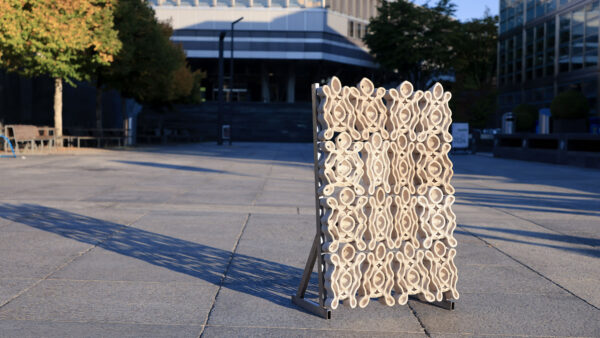
    A Swiss researcher has developed a printable concrete-like material that is bound together by bacteria rather than cement. Karen Antorveza Paez developed the process while completing her doctorate at the Department of Architecture at ETH Zurich and has used it to make several architectural elements. More research is needed to make the material load-bearing. The bacteria, Sporosarcina pasteurii, bonds sand and other grains together into a solid material by forming calcium carbonate, the mineral that makes up limestone. No heating is required, which raises the possibility of avoiding the emissions produced in making cement at some point in the future. The process, known as biocementation, has previously been used to stabilise soils and in self-healing concrete. When bacteria are combined with sand or other solid grains, they join the particles together into a solid structure made of interlocking, microscopic calcite crystals.
  • Global · Global Construction Review ·

    Compact diesel machines are jumbo polluters and here’s what we can do about it

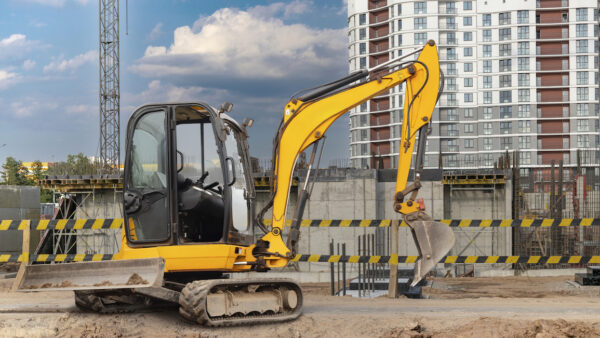
    As cities work to improve air quality, one source of emissions continues to fly under the radar: diesel-powered compact construction equipment. A familiar feature of urban life, these machines operate close to homes, schools and workplaces, yet their contribution to air pollution is often overlooked. While larger equipment and on-road vehicles are subject to increasingly stringent emissions standards, compact diesel machines continue to benefit from a regulatory framework that is far less demanding. As a result, they can make a disproportionate contribution to urban air pollution. Their widespread use in cities also means noise can be a significant issue for both site workers and nearby communities. Practical, commercially viable solutions already exist, but first it is important to understand why this gap persists.

  • Global · Global Construction Review ·

    CIOB praises Irish budget but warns of underlying constraints and a retreat on carbon taxes

    The Chartered Institute of Building (CIOB) has responded to Ireland’s 2027 budget announcement, welcoming investment in transport, housing and energy infrastructure, but noting concerns about underlying constraints in housing delivery and the reduction of carbon taxes. The €8.65bn budget contains €7bn in additional spending and €1.65bn in tax measures. Infrastructure €4.2bn is earmarked for National Development Plan projects such as Dublin’s DART+ rail system, Cork Area Commuter Rail and the nationwide BusConnects programme, plus road projects like the Galway Ring Road and the M28 from Cork to Ringaskiddy. €6bn will be spent between 2027 and 2030 to progress MetroLink, the country’s first high-capacity, automated underground railway. The CIOB wants to see the investment accompanied by sufficient capacity in delivery agencies. Planning, procurement and coordination must also be improved to reduce delays in major projects.

  • Global · Global Construction Review ·

    Schiphol airport to get house in order with five, nine-year contracts

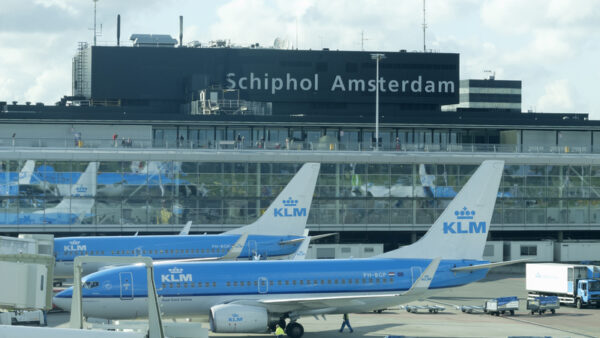
    Amsterdam’s Schiphol Airport has launched five major tenders covering maintenance, replacement and project works relating to terminals, technical installations, aprons and operational buildings. The scope of work includes upkeep of critical infrastructure such as aircraft aprons, passenger bridges, electric charging infrastructure, technical rooms, retail, climate control systems and operational facilities. The airport offers long-term contracts running to 2037 in a bid to improve efficiency and craftsmanship. Many current construction and maintenance contracts at Schiphol are due to expire in 2028. The new contract model involves Schiphol taking a stronger client and asset-management role as infrastructure operator, with greater responsibility for the airport’s assets. Bart Smolders, Royal Schiphol Group’s chief infrastructure officer, said : “Our goal is to restore Schiphol to the standard of Europe’s leading airports, offering a high-quality experience for travellers and airlines. “Large parts of our infrastructure will be renewed, replaced or renovated over the coming years.

  • Global · Global Construction Review ·

    Ukrainian school to become 42 homes for families displaced by invasion

    A former school located in Stavyshche, central Ukraine, is being transformed into a shelter with 42 homes for families displaced by Russia’s invasion. Called Dvir, the 1,900-sq-m building will have studios and one-, two- and three-bedroom apartments, including accessible ones for those with disabilities. The building will have 200 sq m of common areas, children’s play areas and gathering spaces. It has been designed by Italian and Swiss architect Office for Future on behalf of charity, Housing for IDP. The school will be crowned with a newly built timber roof with 800 sq m of photovoltaic panelling. A central courtyard which was once fully paved will be converted into a permeable green space, with existing asphalt acting as pedestrian pathways through the new garden.

Talk through your AI plans with our team

Book a strategy call. We'll look at where AI can save your team time, what it will take, and what to leave alone.