
Skip to content

AEC news · By country

Global AEC news (page 3 of 3)

Construction, infrastructure and architecture news from around the world, from major projects and contract awards to design and industry trends.

Stories 97–112 of 112

  • Global · Global Construction Review ·

    Vinci to build Poland’s largest concert hall for €149m

    Warbud, a Polish subsidiary of France’s Vinci, has won a €149m construction contract for the second phase of the Sinfonia Varsovia Centrum, set to be Poland’s largest concert hall with 1,877 seats, plus music production and broadcast facilities. Two buildings will be renovated to create a combined 2,185-sq-m space connected to the main building with a public garden and a 400m suspended promenade. The facility will be the new home of the Sinfonia Varsovia symphony orchestra. It has been designed by Austria’s Atelier Thomas Pucher, with acousticians from Belgium’s Eckhard Kahle Acoustics and Germany’s Müller-BBM. A smaller chamber hall will accommodate 400 attendees. Work on the Sinfonia Varsovia Centrum is due to be completed in 2030. Subscribe to our newsletter here to receive construction news and insights from around the world straight to your inbox


  • Global · Global Construction Review ·

    PPEthatfits fashion show takes Canada by storm

    At the Canadian Association of Women in Construction (CAWIC) Annual Conference in Calgary, this year’s theme, ‘Tools for Transformation’, highlighted how meaningful industry change can begin with addressing everyday challenges faced by construction professionals. One example was the Mark’s Commercial PPE Showcase and Fashion Show, which demonstrated the importance of personal protective equipment (PPE) designed around the people wearing it. Historically, women have often relied on PPE designed for men produced in smaller sizes. However, reducing the size does not necessarily address differences in fit, proportion or functionality. The showcase featured practical innovations, including coveralls designed to make using portable toilets easier for women, workwear suitable for transitioning between office and site environments, and clothing adapted for challenging weather conditions. Unsuitable options At 5 ft 2in, I experienced the importance of proper fit first-hand when my original outfit didn’t fit.

  • Global · Global Construction Review ·

    Shanghai opera house opens after decade in development

    Shanghai’s Grand Opera House, designed by a team of Snøhetta, East China Architectural Design & Research Institute, Theatre Projects and Nagata Acoustics, has opened on the Huangpu River. Snøhetta won a design competition in 2016 for the opera house whose one-piece, swirling roof also acts as a stage and observation deck. The 146,786-sq-m project contains three auditoria with a combined 4,200 seating capacity. The biggest is the 2,000-capacity main venue called Harmony Hall, a five-storey theatre with stalls, parterre and three balconies. The 1,200-capacity Soar Theatre is designed for baroque and classical opera, operetta, regional production and theatre, while the 1,000-seat Open Stage supports experimental and flexible performance formats through adaptable stage and seating configurations. The three venues are located under a single roof, with a similar colour palette that moves from lighter to darker tones.

  • Global · Global Construction Review ·

    High-speed line opens between Istanbul and the Bulgarian border

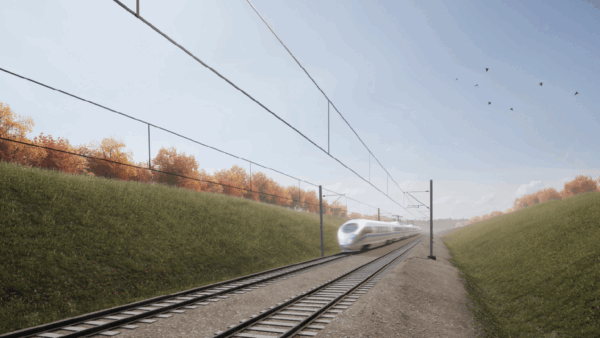
    A section of a high-speed rail planned to connect Istanbul to the Bulgarian border has been completed by a consortium of Italy’s Webuild and Turkey’s Kolin Group for Turkish State Railways. The 153km line runs between Çerkezköy, a Turkish logistics and manufacturing district west of Istanbul up to Kapıkule, a rail and road crossing on the border with Bulgaria near the Turkish city of Edirne. It forms the longest stretch of the yet to be completed 229km route planned to run between Kapıkule and Halkalı, a transportation hub near Istanbul on the European side of the Bosphorus Strait. The electrified double track lets trains travel at speeds of up to 200km/h. Passenger and freight trains will use it. It will cut passenger travel times from 4 hours to 1.5 hours, while freight transit times will fall from 8.5 hours to 3.5 hours.

  • Global · Global Construction Review ·

    EU funds Latvian low-carbon cement factory

    The European Commission’s EU Innovation Fund will grant Swedish company Cemvision up to €27.5m to build a cement plant in Ventspils, Latvia that can produce 500,000 tonnes of ultra-low-carbon cement a year. The plant will make supersulfated cement, which has greater strength than other low-emission cement types and can cut CO₂ emissions by 93% compared to traditional cement. Cemvision will sign a grant agreement with the European Climate, Infrastructure and Environment Executive Agency between November 2026 and March 2027. The plant was one of 77 projects in 27 countries chosen for funding out of 358 applications. The Innovation Fund is financed by revenues from the EU Emissions Trading System. Subscribe to our newsletter here to receive construction news and insights from around the world straight to your inbox
  • Global · Global Construction Review ·

    Swiss researcher develops printable concrete held together with bacteria

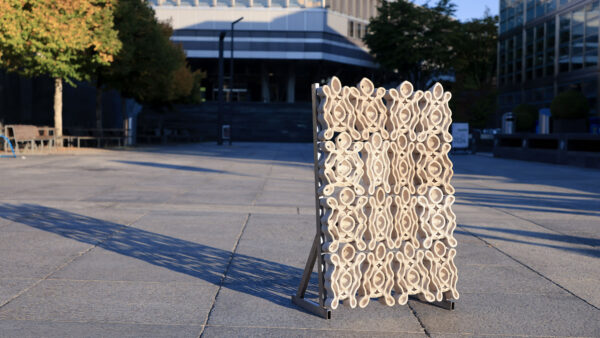
    A Swiss researcher has developed a printable concrete-like material that is bound together by bacteria rather than cement. Karen Antorveza Paez developed the process while completing her doctorate at the Department of Architecture at ETH Zurich and has used it to make several architectural elements. More research is needed to make the material load-bearing. The bacteria, Sporosarcina pasteurii, bonds sand and other grains together into a solid material by forming calcium carbonate, the mineral that makes up limestone. No heating is required, which raises the possibility of avoiding the emissions produced in making cement at some point in the future. The process, known as biocementation, has previously been used to stabilise soils and in self-healing concrete. When bacteria are combined with sand or other solid grains, they join the particles together into a solid structure made of interlocking, microscopic calcite crystals.

  • Global · Global Construction Review ·

    Bouygues opens testing facility for materials, equipment and technology

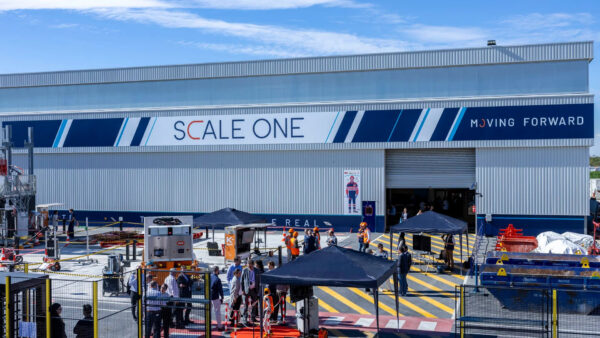
    France’s Bouygues Construction has opened Scale One, a 2,500-sq-m facility in Chilly-Mazarin, south of Paris, which tests new materials, equipment, construction methods and technologies under real-world conditions before their use on site. It has areas for recreating construction and renovation sites, a concrete printing facility, a robotics training area and a ‘FabLab’ for prototyping equipment. Drilling robots, concrete printers, a prefabricated concrete wall system for EPR nuclear plants and photovoltaic cladding are among the systems being tested now. Scale One was a winner of the 2023 “Major Innovation Sites for French Industries 2030” award, organised by the French government and the Ile-de-France region. The facility is open to the sector and offers support for consultancy, prototyping, evaluations and testing. Pierre-Éric Saint-André, Bouygues Construction’s chief executive, said: “Accelerating the innovation process will speed up the transformation of our sector.

  • Global · Global Construction Review ·

    Ferrovial and Strabag team win Czech Republic’s largest transport PPP contract

    A consortium comprising investor Invesis, Austria’s Strabag, Poland’s Budimex and Spain’s Cintra, both subsidiaries of Ferrovial, has signed a 28-year public-private partnership (PPP) contract with the Czech Ministry of Transport for a 52km-long road along the D35 corridor. The completed motorway will run between Litomyšl and Mohelnice in the eastern Czech Republic, linking Bohemia with Moravia, while alleviating traffic along the existing I/35 road and D1 motorway. The PPP includes design, construction, financing, operation and maintenance of a 35.4km section of the D35 motorway between Opatovec, Staré Město and Mohelnice. The contract’s scope of work also involves maintenance and operation of 17km of existing motorway between Litomyšl and Opatovec junctions.

  • Global · Global Construction Review ·

    Compact diesel machines are jumbo polluters and here’s what we can do about it

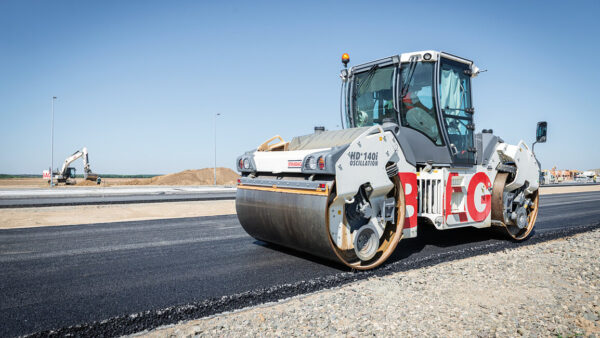
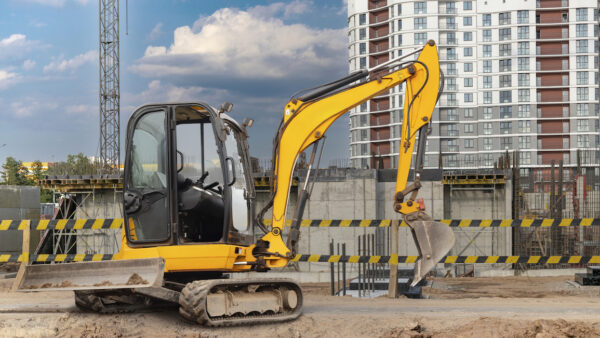
    As cities work to improve air quality, one source of emissions continues to fly under the radar: diesel-powered compact construction equipment. A familiar feature of urban life, these machines operate close to homes, schools and workplaces, yet their contribution to air pollution is often overlooked. While larger equipment and on-road vehicles are subject to increasingly stringent emissions standards, compact diesel machines continue to benefit from a regulatory framework that is far less demanding. As a result, they can make a disproportionate contribution to urban air pollution. Their widespread use in cities also means noise can be a significant issue for both site workers and nearby communities. Practical, commercially viable solutions already exist, but first it is important to understand why this gap persists.

  • Global · Global Construction Review ·

    CIOB praises Irish budget but warns of underlying constraints and a retreat on carbon taxes

    The Chartered Institute of Building (CIOB) has responded to Ireland’s 2027 budget announcement, welcoming investment in transport, housing and energy infrastructure, but noting concerns about underlying constraints in housing delivery and the reduction of carbon taxes. The €8.65bn budget contains €7bn in additional spending and €1.65bn in tax measures. Infrastructure €4.2bn is earmarked for National Development Plan projects such as Dublin’s DART+ rail system, Cork Area Commuter Rail and the nationwide BusConnects programme, plus road projects like the Galway Ring Road and the M28 from Cork to Ringaskiddy. €6bn will be spent between 2027 and 2030 to progress MetroLink, the country’s first high-capacity, automated underground railway. The CIOB wants to see the investment accompanied by sufficient capacity in delivery agencies. Planning, procurement and coordination must also be improved to reduce delays in major projects.

  • Global · Global Construction Review ·

    Schiphol airport to get house in order with five, nine-year contracts

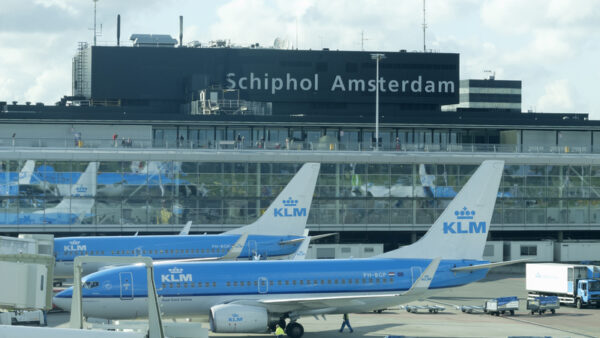
    Amsterdam’s Schiphol Airport has launched five major tenders covering maintenance, replacement and project works relating to terminals, technical installations, aprons and operational buildings. The scope of work includes upkeep of critical infrastructure such as aircraft aprons, passenger bridges, electric charging infrastructure, technical rooms, retail, climate control systems and operational facilities. The airport offers long-term contracts running to 2037 in a bid to improve efficiency and craftsmanship. Many current construction and maintenance contracts at Schiphol are due to expire in 2028. The new contract model involves Schiphol taking a stronger client and asset-management role as infrastructure operator, with greater responsibility for the airport’s assets. Bart Smolders, Royal Schiphol Group’s chief infrastructure officer, said : “Our goal is to restore Schiphol to the standard of Europe’s leading airports, offering a high-quality experience for travellers and airlines. “Large parts of our infrastructure will be renewed, replaced or renovated over the coming years.

  • Global · Global Construction Review ·

    Five shortlisted for Warsaw-Łódź high-speed contract

    Five bidders have been shortlisted to build a 14.3km-long high-speed railway linking the Polish cities of Warsaw and Łódź as part of Poland’s Port Polska mega transport project. The winner will design and build the railway for trains travelling up to 350km/h, plus 55 road and railway bridges and viaducts, drainage culverts, wildlife crossings and 30km of roads. The shortlist was announced by delivery body Centralny Port Komunikacyjny and includes four consortia and one company: Strabag and Tym-Bud; Torpol, Mirbud and Kobylarnia; Budimex; Porr and Trakcja; Intercor and NDI. 19 companies including six consortia had submitted bids for the contract. The winner will be announced before the close of 2027. Piotr Rachwalski, member of Port Polska’s rail management board, said: “The tenders for Poland’s first high-speed rail line, between Warsaw and Łódź, are a key priority for us.

  • Global · Global Construction Review ·

    Ukrainian school to become 42 homes for families displaced by invasion

    A former school located in Stavyshche, central Ukraine, is being transformed into a shelter with 42 homes for families displaced by Russia’s invasion. Called Dvir, the 1,900-sq-m building will have studios and one-, two- and three-bedroom apartments, including accessible ones for those with disabilities. The building will have 200 sq m of common areas, children’s play areas and gathering spaces. It has been designed by Italian and Swiss architect Office for Future on behalf of charity, Housing for IDP. The school will be crowned with a newly built timber roof with 800 sq m of photovoltaic panelling. A central courtyard which was once fully paved will be converted into a permeable green space, with existing asphalt acting as pedestrian pathways through the new garden.

  • Global · Global Construction Review ·

    Bechtel-Westinghouse sign EPC contract for Poland’s first nuclear plant

    A consortium of Bechtel and nuclear power firm Westinghouse has been awarded an engineering, procurement and construction (EPC) contract from the state-owned Polskie Elektrownie Jądrowe (PEJ) for the country’s first nuclear power plant. They will build the facility in Choczewo, Pomerania, on the Baltic coast. PEJ said the new plant will start generating electricity in 2036. The EPC contract’s main commercial terms have been agreed, paving the way for further, detailed negotiations regarding the remaining aspects. The second stage of preparatory work is currently underway, involving grading and levelling the site, drainage works, construction of temporary roads and geological surveys. PEJ applied in March 2026 for a building permit to begin in 2027. Budimex, Doraco, Unihouse, MSA Security and Barg M.B Gdańsk arę among some of the Polish companies that have won contracts worth $250m on the project. The price tag for the nuclear plant could reach $37bn .

  • Global · Global Construction Review ·

    EU helps finance €2bn Romanian rail upgrade

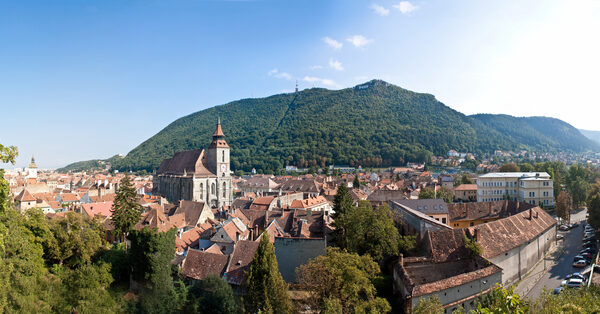
    The EU’s European Investment Bank (EIB) has signed a €630m financing agreement with Romania for the €2.25bn upgrade of the Brașov-Sighișoara railway. The project will upgrade 113km of double-track, electrified railway between Brașov and Sighișoara in central Romania to let passenger trains travel at up to 160km/h and freight trains at up to 120km/h. It will allow longer and heavier freight trains to use the route. The upgraded line will carry an estimated four million passengers and six million tonnes of freight a year. The upgrade will remove bottlenecks from both the Rhine-Danube rail corridor and the trans-European transport network. The goal is to reduce road congestion by encouraging more rail travel. The EIB will help Romanian authorities prepare and implement the investment. “This is an investment in people, connectivity and Romania’s future,” said EIB vice president Ioannis Tsakiris.

  • Global · Global Construction Review ·

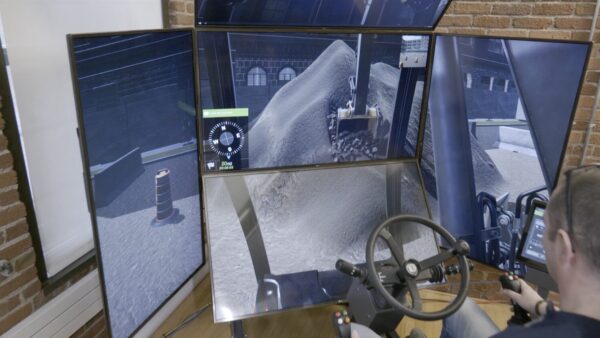
    Can training simulators improve plant safety?

    Can training simulators make a difference to the safe and effective use of construction plant? That question will be tackled in a forthcoming webinar from GCR ‘s sister title, Construction Management . The webinar, entitled The state of heavy equipment training , takes place on 6 October at 2.30pm BST. Experts from CM Labs and the University of Munich examine the state of heavy equipment operator training. The experts are David Junca, vice-president of revenue and growth EMEA at CM Labs, and Dr. Felix Top, a senior researcher at the Chair of Materials Handling, Material Flow, Logistics at the Technical University of Munich.

Talk through your AI plans with our team

Book a strategy call. We'll look at where AI can save your team time, what it will take, and what to leave alone.