
Skip to content

AEC news · By topic

Infrastructure: AEC news (page 5 of 5)

Rail, metro, roads, bridges, tunnels, airports, ports, water and energy projects.

Stories 193–198 of 198

  • Global · Global Construction Review ·

    CIOB praises Irish budget but warns of underlying constraints and a retreat on carbon taxes

    The Chartered Institute of Building (CIOB) has responded to Ireland’s 2027 budget announcement, welcoming investment in transport, housing and energy infrastructure, but noting concerns about underlying constraints in housing delivery and the reduction of carbon taxes. The €8.65bn budget contains €7bn in additional spending and €1.65bn in tax measures. Infrastructure €4.2bn is earmarked for National Development Plan projects such as Dublin’s DART+ rail system, Cork Area Commuter Rail and the nationwide BusConnects programme, plus road projects like the Galway Ring Road and the M28 from Cork to Ringaskiddy. €6bn will be spent between 2027 and 2030 to progress MetroLink, the country’s first high-capacity, automated underground railway. The CIOB wants to see the investment accompanied by sufficient capacity in delivery agencies. Planning, procurement and coordination must also be improved to reduce delays in major projects.

  • Global · Global Construction Review ·

    Schiphol airport to get house in order with five, nine-year contracts

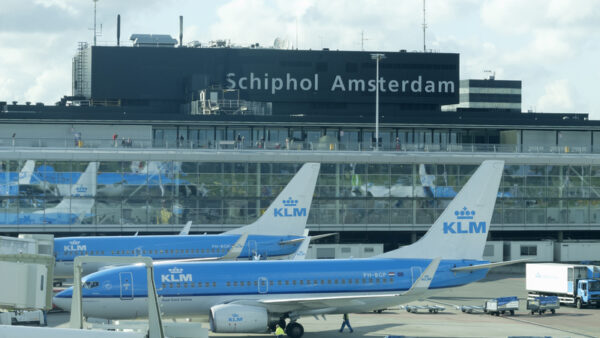
    Amsterdam’s Schiphol Airport has launched five major tenders covering maintenance, replacement and project works relating to terminals, technical installations, aprons and operational buildings. The scope of work includes upkeep of critical infrastructure such as aircraft aprons, passenger bridges, electric charging infrastructure, technical rooms, retail, climate control systems and operational facilities. The airport offers long-term contracts running to 2037 in a bid to improve efficiency and craftsmanship. Many current construction and maintenance contracts at Schiphol are due to expire in 2028. The new contract model involves Schiphol taking a stronger client and asset-management role as infrastructure operator, with greater responsibility for the airport’s assets. Bart Smolders, Royal Schiphol Group’s chief infrastructure officer, said : “Our goal is to restore Schiphol to the standard of Europe’s leading airports, offering a high-quality experience for travellers and airlines. “Large parts of our infrastructure will be renewed, replaced or renovated over the coming years.

  • United States · Global Construction Review ·

    FIDIC signs agreement supporting Latin American infrastructure

    The International Federation of Consulting Engineers (FIDIC) has signed a Memorandum of Understanding with the International Road Federation (IRF) to collaborate on research, capacity building and knowledge sharing in the road, transport and infrastructure sectors. The MoU was signed at the 2026 Latin America and the Caribbean Transport Forum and involves both organisations focusing on supporting quality infrastructure delivery across Latin America by engaging with those working on road and transport networks in the region on preparation, asset management, public procurement and management. Alfredo Ingletti, FIDIC’s president, said : “The infrastructure Latin America builds over the next decade will shape its growth, safety and connectivity for generations. Investment alone will not deliver it; it takes the skills and expertise to plan, procure and manage infrastructure well.” Susanna Zammataro, FIDIC’s chief executive officer, said: "There is an important pipeline of infrastructure projects in Latin America right now.

  • Global · Global Construction Review ·

    Five shortlisted for Warsaw-Łódź high-speed contract

    Five bidders have been shortlisted to build a 14.3km-long high-speed railway linking the Polish cities of Warsaw and Łódź as part of Poland’s Port Polska mega transport project. The winner will design and build the railway for trains travelling up to 350km/h, plus 55 road and railway bridges and viaducts, drainage culverts, wildlife crossings and 30km of roads. The shortlist was announced by delivery body Centralny Port Komunikacyjny and includes four consortia and one company: Strabag and Tym-Bud; Torpol, Mirbud and Kobylarnia; Budimex; Porr and Trakcja; Intercor and NDI. 19 companies including six consortia had submitted bids for the contract. The winner will be announced before the close of 2027. Piotr Rachwalski, member of Port Polska’s rail management board, said: “The tenders for Poland’s first high-speed rail line, between Warsaw and Łódź, are a key priority for us.

  • Global · Global Construction Review ·

    Bechtel-Westinghouse sign EPC contract for Poland’s first nuclear plant

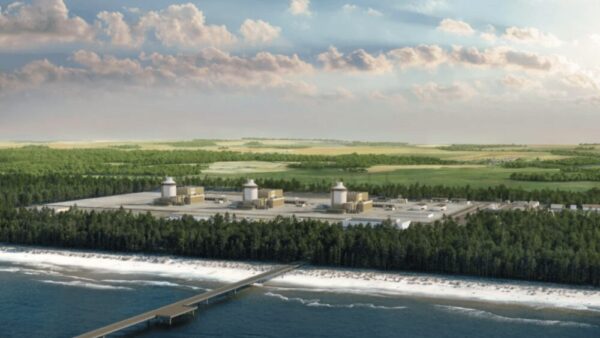
    A consortium of Bechtel and nuclear power firm Westinghouse has been awarded an engineering, procurement and construction (EPC) contract from the state-owned Polskie Elektrownie Jądrowe (PEJ) for the country’s first nuclear power plant. They will build the facility in Choczewo, Pomerania, on the Baltic coast. PEJ said the new plant will start generating electricity in 2036. The EPC contract’s main commercial terms have been agreed, paving the way for further, detailed negotiations regarding the remaining aspects. The second stage of preparatory work is currently underway, involving grading and levelling the site, drainage works, construction of temporary roads and geological surveys. PEJ applied in March 2026 for a building permit to begin in 2027. Budimex, Doraco, Unihouse, MSA Security and Barg M.B Gdańsk arę among some of the Polish companies that have won contracts worth $250m on the project. The price tag for the nuclear plant could reach $37bn .

  • Global · Global Construction Review ·

    EU helps finance €2bn Romanian rail upgrade

    The EU’s European Investment Bank (EIB) has signed a €630m financing agreement with Romania for the €2.25bn upgrade of the Brașov-Sighișoara railway. The project will upgrade 113km of double-track, electrified railway between Brașov and Sighișoara in central Romania to let passenger trains travel at up to 160km/h and freight trains at up to 120km/h. It will allow longer and heavier freight trains to use the route. The upgraded line will carry an estimated four million passengers and six million tonnes of freight a year. The upgrade will remove bottlenecks from both the Rhine-Danube rail corridor and the trans-European transport network. The goal is to reduce road congestion by encouraging more rail travel. The EIB will help Romanian authorities prepare and implement the investment. “This is an investment in people, connectivity and Romania’s future,” said EIB vice president Ioannis Tsakiris.

Talk through your AI plans with our team

Book a strategy call. We'll look at where AI can save your team time, what it will take, and what to leave alone.