

Skip to content

AI+AEC in News · Dezeen

Carlo Ratti and AI assistant to curate Seoul Biennale of Architecture and Urbanism 2027

Excerpt from Dezeen

Italian architect Carlo Ratti has been named the curator of next year's Seoul Biennale of Architecture and Urbanism , for which he plans to take "an unconventional, AI-based" approach. Taking place from 24 September 2027, the biennale will be used by Ratti as an opportunity to question the role of a curator today through the lens of architecture. However, the event's title, theme and full curatorial team will not be unveiled until 8 December. "One assistant curator isn't even human" What Ratti has revealed so far is that he plans to take "an unconventional, AI-based" approach to the event. Specifically, he will use an AI assistant, aiming to challenge traditional approaches to developing exhibitions by highlighting emerging tools that can help curators. “I am delighted to take on the direction of the Seoul Biennale and to explore the future of cities together with the Seoul Metropolitan Government,” says Carlo Ratti.

Published by Dezeen ·

Read the full article on Dezeen (opens in a new tab)
Image: Dezeen

Image: Dezeen, shown from the publisher’s website.

How can your firm use this?

CloudBrain helps architecture, engineering and construction firms in India turn developments like this into working tools. Related service:

Custom AI tools & agentsAI tools and agents built around your own data and processes.

Topics

#AI#AEC#AIAgents#GenerativeAI#Architecture

The headline and excerpt are from Dezeen, which owns them; CloudBrain is not affiliated with Dezeen. Read the original article (opens in a new tab) · All AI+AEC news
  • AEC Magazine ·

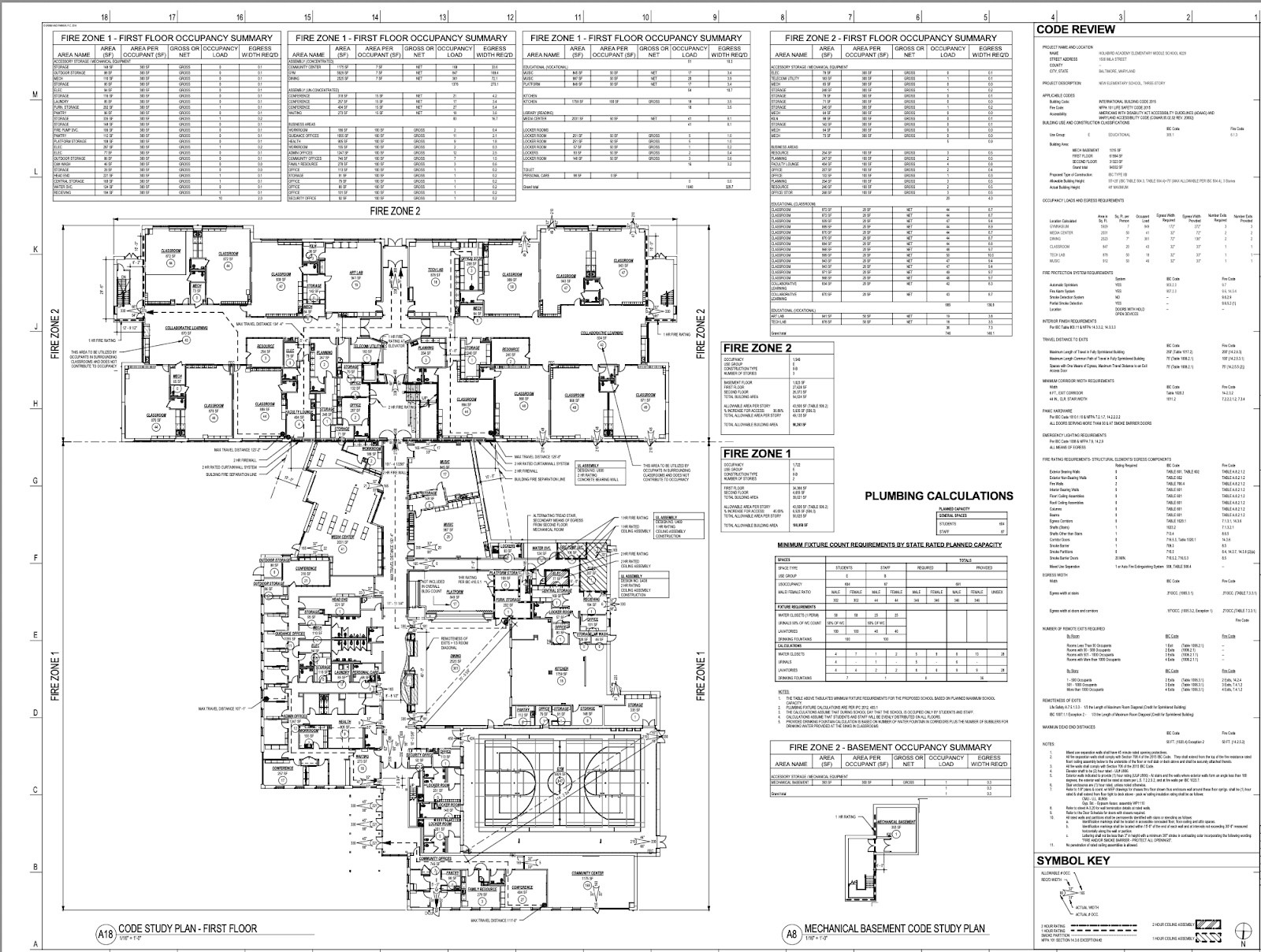
    Nomic extends AI agents into CAD drafting and BIM

    AI-powered drawing review platform can now generate native CAD files, automate drawing revisions and work directly inside Autodesk Revit and AutoCAD Nomic , the developer of AI-powered drawing review software for the AEC industry, has extended its platform to include automated CAD drafting. Users can describe a drawing in natural language or supply an existing drawing for revision, with the AI agent returning an editable CAD file together with a plotted PDF for review. The development marks a significant expansion of Nomic’s capabilities, moving beyond identifying errors and inconsistencies in construction documentation to actively addressing them. The same AI agent that reviews drawings against specifications, building codes and company standards can now implement changes, drawing on its knowledge of project documentation, review comments and previously issued drawings.

  • AEC Magazine ·

    Rayon V4: a different bet on the future of CAD

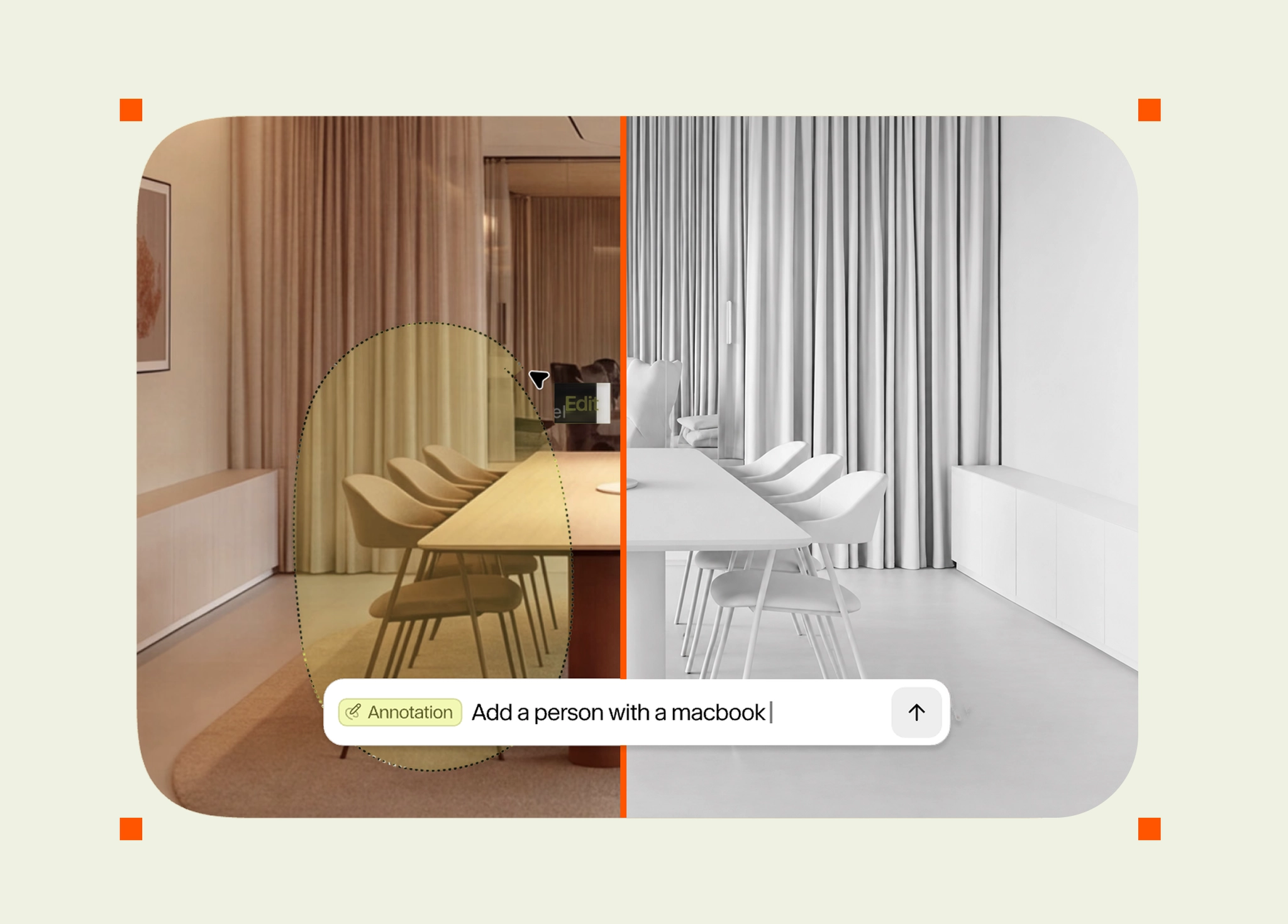
    Rayon V4 adds 3D modelling, an AI agent, generative rendering and mobile access to its browser-based design software. AEC Magazine saw the new release ahead of launch and put its AI tools to an unplanned test Much of the BIM 2.0 market is trying to take a piece of Revit, but Rayon has other plans. ‘We’re going after the gap between AutoCAD and SketchUp,’ says co-founder Stanislas Chaillou. Released today, V4 brings 3D modelling and agentic AI into Rayon’s established 2D CAD environment. Both capabilities launch in beta, adding a new dimension to a product that remains firmly focused on interiors. Prior to the launch, we met Chaillou for a demonstration. The 3D modelling was better than expected, but it was an unscripted request during the AI demonstration that raised the more interesting questions about where CAD might be heading.

  • AEC Magazine ·

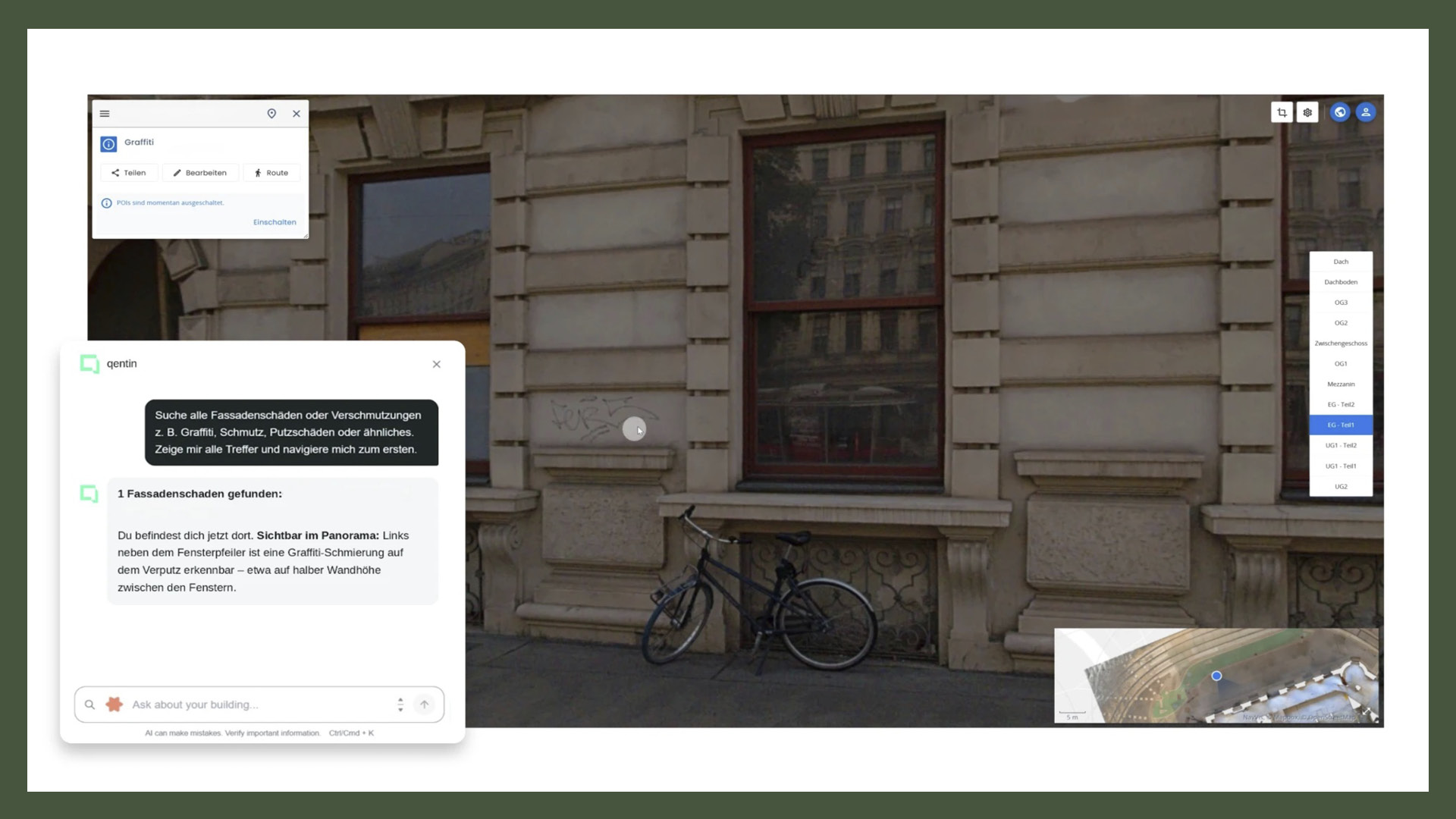
    AI makes scanned buildings searchable

    qentin helps facility managers find assets, check safety features and explore “digital twins“ using natural language. Finding all the fire extinguishers, checking for damage or locating a piece of equipment by its asset tag in a large building could become considerably easier with qentin, an AI agent that lets facility managers search laser-scanned “digital twins” using natural language. Currently in early access, the software is developed by Austrian startup qapture, which has spent the past six years laser scanning buildings across Austria, Switzerland and Germany. Its projects include 38 Ikea sites covering more than 2 million square metres. Once a building has been scanned and georeferenced, qentin uses AI to automatically detect, label and locate objects. It can also read labels and asset tags directly from the scans using text recognition.

  • AEC Magazine ·

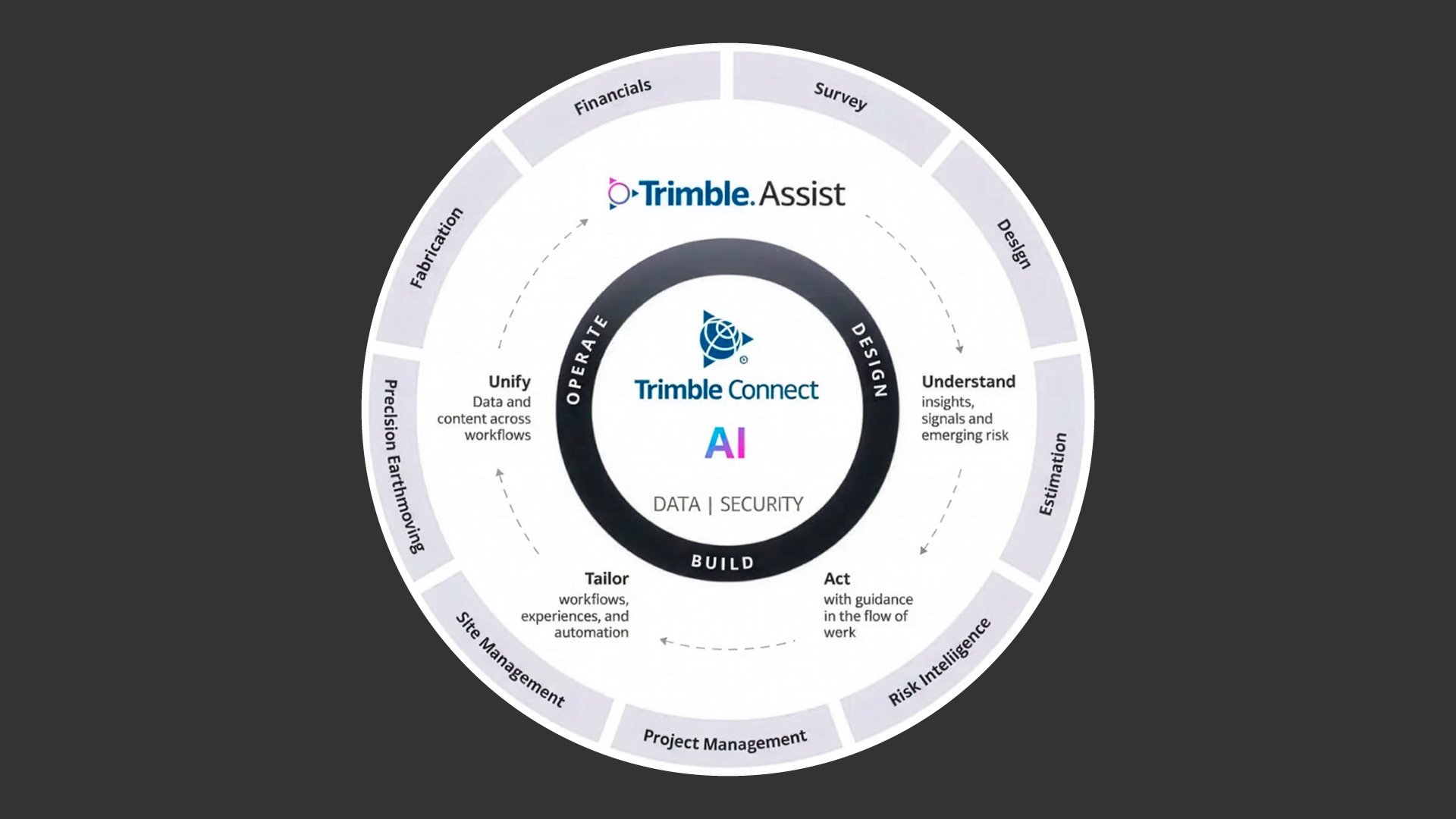
    Trimble embeds AI across AECO

    Trimble Connect platform introduces AI agents and automation to improve project coordination, manage risk and streamline workflows Trimble has embedded AI within Trimble Connect , expanding the platform beyond its traditional role as a common data environment (CDE) to connect site information with design, cost and operational workflows. The new capabilities are intended to help teams identify and mitigate risks across the project lifecycle, while keeping human judgement at the centre of decision-making. Unveiled at Trimble’s Dimensions User Conference, the AI capabilities span design, construction and project operations. In design, they include generating architectural options using live as-built point-cloud data, converting natural-language prompts into constructible structural models, and automatically classifying scanned point clouds into structural elements. For construction teams, applications include AI-powered diagnostics for machine-control systems, converting 360-degree site walk videos into 3D point clouds, and voice-driven site inspections that automatically transcribe observations and link them to project drawings.

  • AEC Magazine ·

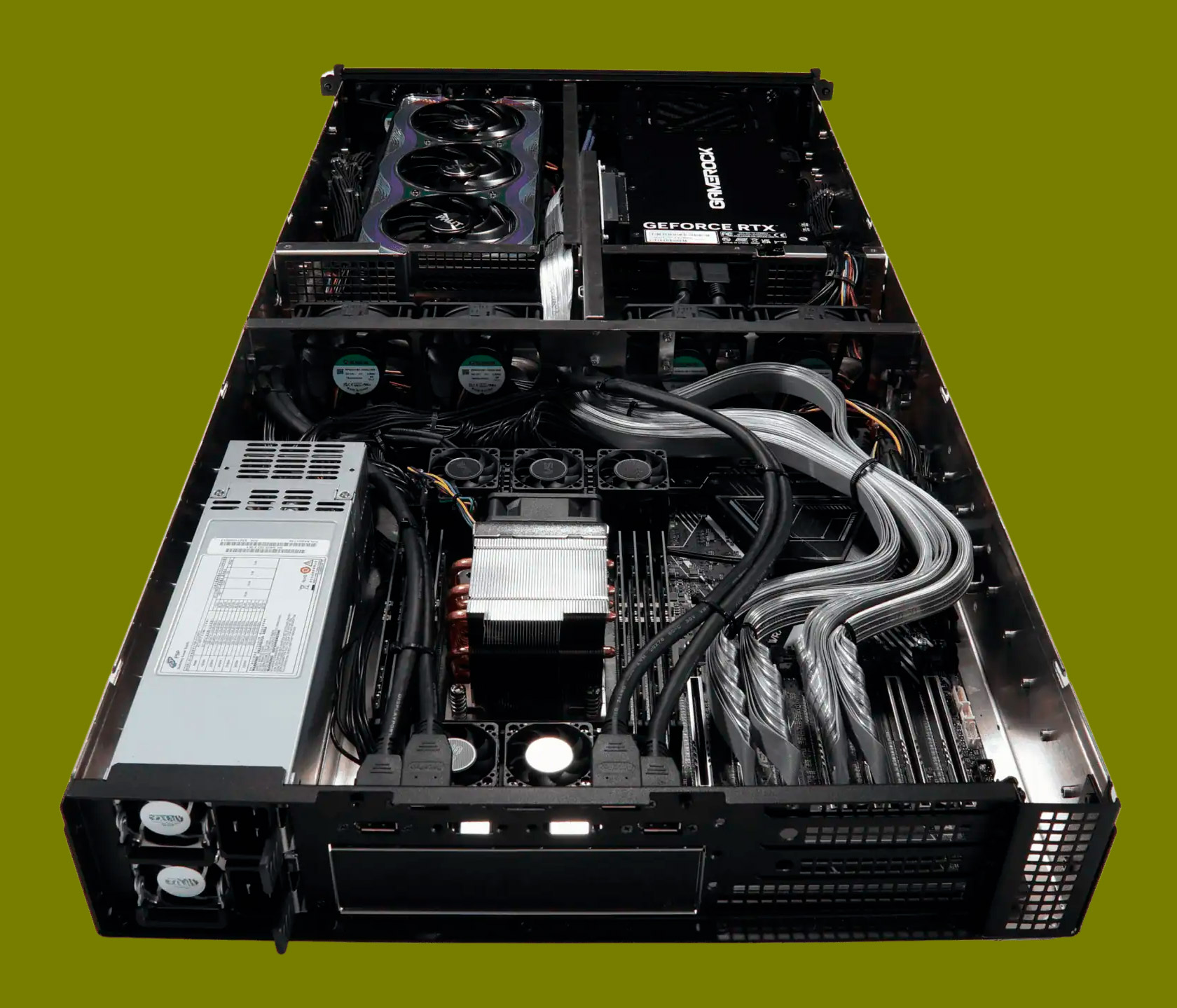
    G2 Digital launches quad-GPU 2U server

    UK-manufactured 2U Q-Power offers firms an on-premise alternative to premium cloud AI services G2 Digital, a UK specialist in custom-built rack-mount computers, has launched the 2U Q-Power, a high-performance GPU server designed for complex AI workloads and rendering. The system can accommodate up to four dual slot Nvidia RTX GPUs, offering twice the capacity of most conventional 2U servers and greater computing density within a rack. This is made possible by a custom chassis design that mounts the GPUs horizontally, parallel to the motherboard. When configured with four Nvidia RTX Pro 6000 Blackwell Max-Q GPUs, the Q-Power delivers 384 GB of combined GPU memory, enabling organisations to run demanding AI workloads entirely on-site. This includes large language models (LLMs) with 70 billion parameters at full precision, as well as significantly larger models using lower-precision formats and quantisation.

  • Archinect ·

    AI companies are offering architects six figures for CAD files; have you been approached?

    Artificial intelligence companies are turning to architects and other AEC firms in search of data. As tech enterprises seek to build AI models and agents to perform industry-specific tasks, such as reviewing drawings and writing RFI responses, architecture firms are being approached by businesses offering money in return for access to private data. “Architects, have you seen this?” asked USC adjunct professor Simon Ha in a LinkedIn post . “This AI company is offering to pay six figures for your CAD files, including revisions and markups, to train AI models on how design work gets done.” Ha’s post included a screenshot of a social media post by a company, Nyne.ai, describing itself as “the data factory for AI,” which said, “You’ve got 3 years of CAD files doing nothing. We’ll pay you six figures for them.” “This raises serious questions about copyright and ownership of instruments of service,” Ha added.

  • AEC Magazine ·

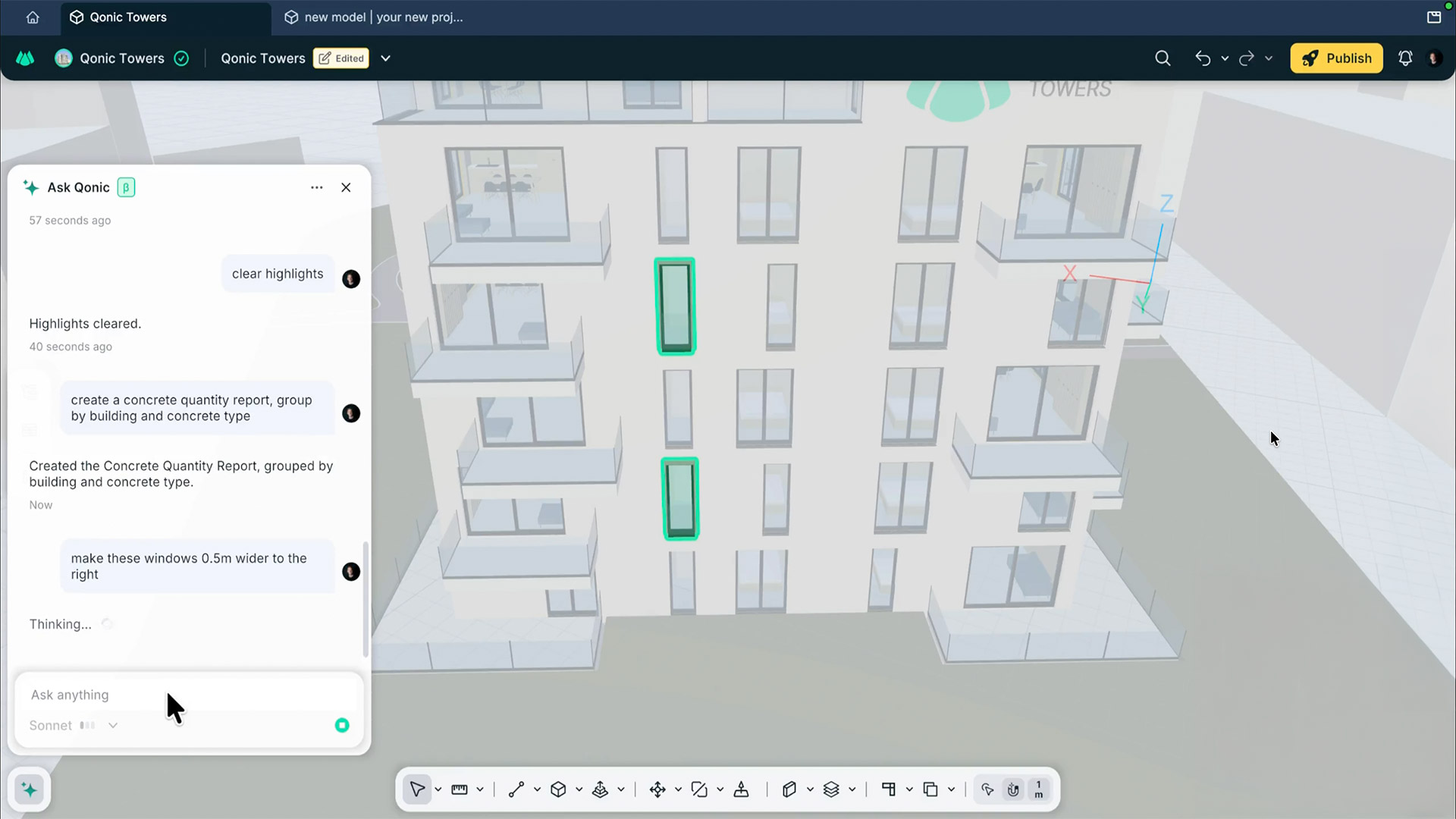
    Qonic AI launches inside BIM platform

    AI agents work directly inside the model, letting users find, check, fix and create BIM data using plain language Qonic has introduced Qonic AI, a collection of agents built into its cloud-based, collaborative BIM modelling platform. Qonic AI works directly inside the BIM model, rather than sitting alongside it. Qonic has also launched an MCP server, which lets users connect their own AI assistant to the platform. Inside Qonic, through the “Ask Qonic” chatbot, users describe what they want in plain language, and Qonic’s agents find, check and update elements using the platform’s own tools. Tasks include completing missing properties, building reports and editing geometry. “Anything you can do in Qonic in terms of geometry and data creation, editing, and manipulation can be done through prompting,” said Qonic’s Jacob De Sutter.

  • AEC Magazine ·

    Autom8Labs launches AEC skills for AI agents

    Guides AI agent through tasks in Revit, AutoCAD, 3ds Max and more, with “clear steps” for doing the work and checking the result Autom8Labs has released 22 free MCP Skills, which work alongside the company’s relevant MCP Connectors for Revit, AutoCAD, Navisworks, Grasshopper, MicroStation, 3ds Max, Rhino, Civil 3D and Advance Steel. Rather than simply telling an AI agent what to do, each MCP skill guides it through the steps an experienced professional would follow. “Giving an AI agent access to a design application doesn’t automatically mean it knows the best way to work in it,” said James Gray, Autom8Labs. “The MCP Connectors give your AI agent the tools. Skills give it the method.”

  • AEC Magazine ·

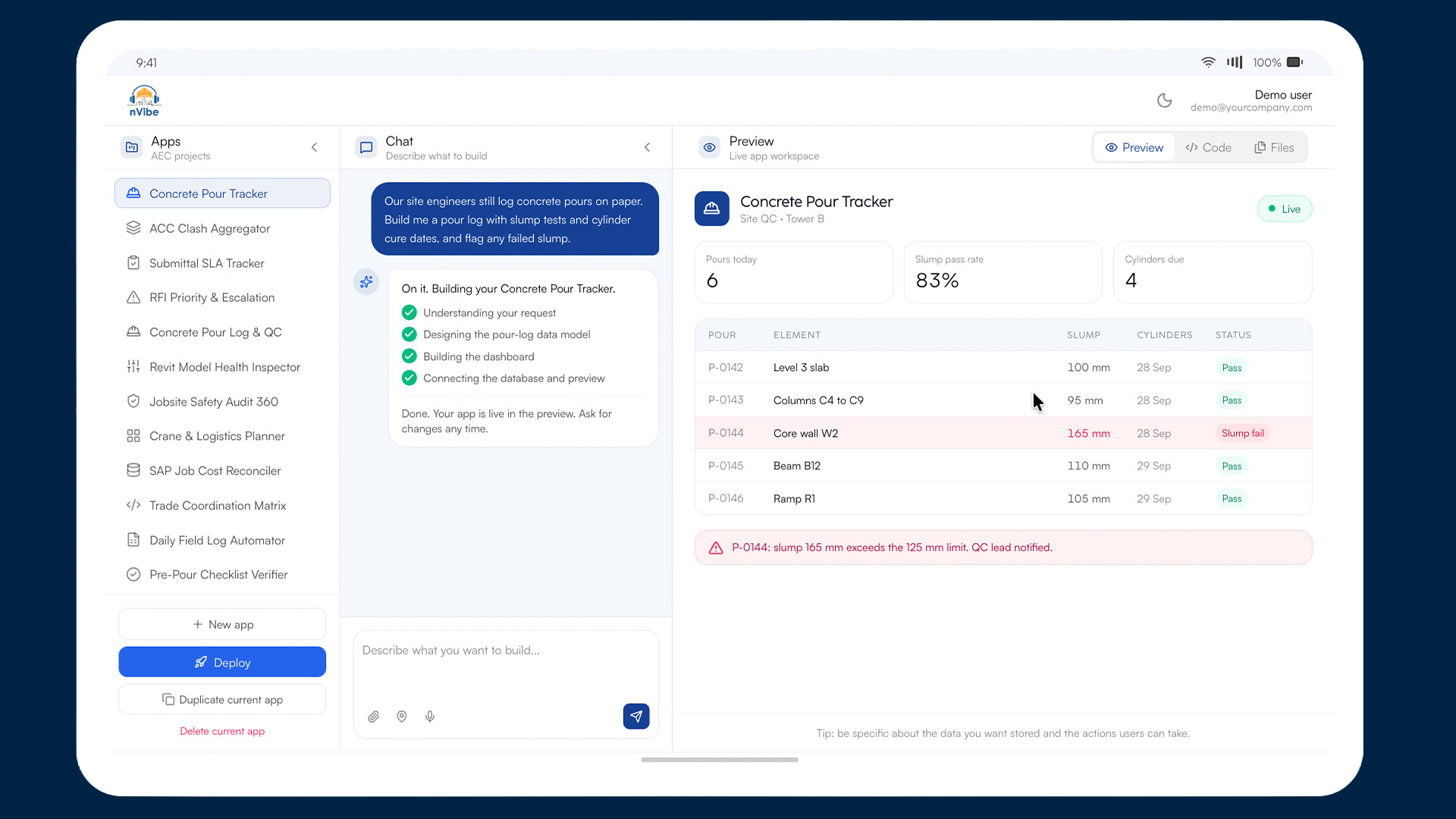
    nCircle Tech launches nVibe AI app builder

    AEC professionals describe the workflow and AI application platform builds the app nCircle Tech has launched nVibe, an AI-powered development platform designed specifically to help AEC professionals turn ideas into working applications without needing coding skills. Domain experts, including site managers, project engineers and VDC leads, can describe a workflow in plain language, and nVibe builds the application within a sandboxed environment designed to give IT teams control over security, permissions and deployment. According to nCircle Tech, nVibe differs from general-purpose AI coding tools through its built-in understanding of AEC terminology and workflows. This includes concepts such as Work Breakdown Structure (WBS) codes, CSI MasterFormat, RFIs, submittals and LoD 100–500.

  • Construction Dive ·

    Construction AI: Here are 5 questions to ask before you buy

    It's not exactly a hot take to state that AI in construction is no longer a pilot project. In 2026, AI assistants on jobsites are answering questions in plain language and taking real steps on a contractor's behalf. This is quickly becoming the baseline across estimating, field operations, fleet management and all the reporting that comes with it. Many contractors now find themselves in an awkward spot. The upside is faster bids, fewer missed line items and less time spent retyping yesterday's logs. However, these same AI tools touch the numbers a company bids, bills and gets paid on, so caution is good business. Also, every vendor promises speed, because it's easy to demo, but trust is what protects margins. Just asking these five questions before pulling the trigger on an AI solution can drastically aid your evaluation process. 1. What data is it built on?

  • AEC Magazine ·

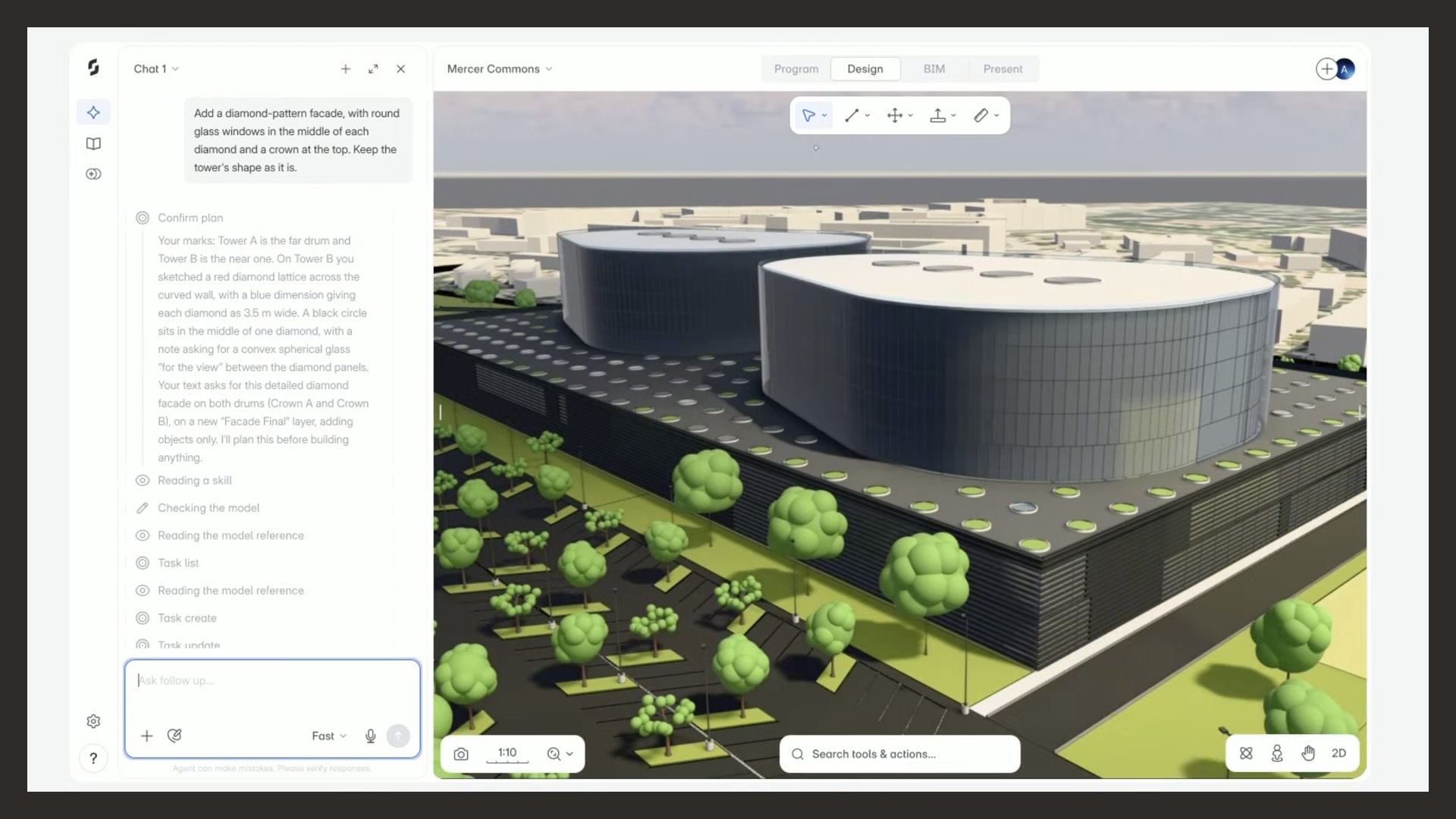
    Snaptrude Agent launches for BIM workflows

    AI agent supports workflows from early concept design to detailed BIM modelling, structural systems, MEP and construction documentation. Snaptrude has introduced Snaptrude Agent, an AI agent for its BIM platform designed to support teams from early concept studies to construction-ready LoD 400 models incorporating structure, mechanical, electrical and plumbing (MEP), and drawings. Users are said to retain control of the process: they give the Agent a prompt or problem, review its proposed plan, then approve it or provide further direction. Discover what’s new in technology for architecture, engineering and construction — read the latest edition of AEC Magazine Subscribe FREE here According to Snaptrude, the Agent can automate tasks across the design process, including concept modelling, detailed BIM modelling and construction documentation. It can generate multiple massing options from a site analysis, ranging from a handful of alternatives to hundreds.

  • Construction Dive ·

    Newforma acquires Lumi AI, will incorporate into its tech

    Newforma, a construction information management technology provider, has acquired Lumi AI , an artificial intelligence startup, according to a Wednesday announcement. The terms of the transaction were not disclosed. With the move, Newforma will connect Toronto-based Lumi’s agentic AI into Vojo, Newforma’s AI assistant that lives on the company’s agentic framework, according to the announcement. Newforma will integrate the agent into its platforms that hold more than two decades of project data, which include RFIs, submittals and communication history. Lumi’s AI helps businesses use plain language queries to investigate and uncover patterns in their data. Going forward, planned capabilities for Vojo include natural language search and cross-project queries across project data, per the announcement. Newforma CEO Peter Cannone told Construction Dive via email that Lumi will not be accessible to non-Newforma customers.

Talk through your AI plans with our team

Book a strategy call. We'll look at where AI can save your team time, what it will take, and what to leave alone.