The American Society of Landscape Architects (ASLA) and the American Institute of Architects (AIA) are taking part in COP31, the United Nations (UN) annual Climate Change Conference.
Robotics startup OKA has released a lamp-shaped artificial intelligence robot designed to offer companionship by greeting people, dancing to music and playing nature sounds. Mori by OKA (One Kind Artificat) is 26.4 centimetres tall, with a cloth-covered base and an illuminated, dome-shaped head that lifts to reveal cartoonish eyes that blink and swivel. According to OKA, Mori "resembles a contemporary table lamp" and was designed to "help people feel calmer, more at ease, and more connected to the world around them". "We wanted Mori to feel like a familiar object in the home rather than an unfamiliar machine," OKA told Dezeen. "Many robots look technical, mechanical, or overly human, while a lamp is something people already live with comfortably." Gallery Previous Next Gallery Close The robot exists in two modes: a lamp setting, when it's compact and at rest, and a responsive setting, when the head is lifted and tilted.
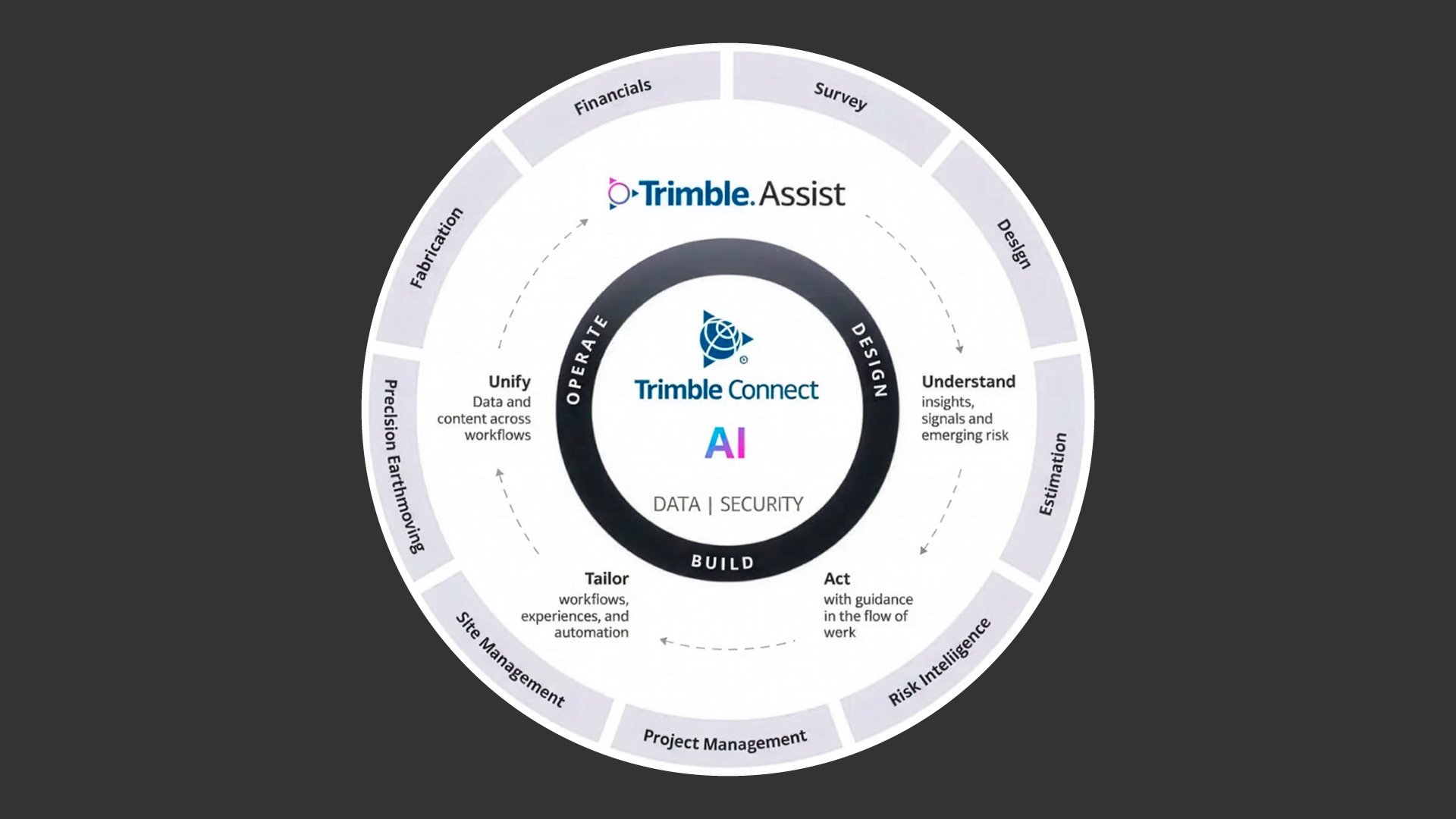
Trimble Connect platform introduces AI agents and automation to improve project coordination, manage risk and streamline workflows Trimble has embedded AI within Trimble Connect , expanding the platform beyond its traditional role as a common data environment (CDE) to connect site information with design, cost and operational workflows. The new capabilities are intended to help teams identify and mitigate risks across the project lifecycle, while keeping human judgement at the centre of decision-making. Unveiled at Trimble’s Dimensions User Conference, the AI capabilities span design, construction and project operations. In design, they include generating architectural options using live as-built point-cloud data, converting natural-language prompts into constructible structural models, and automatically classifying scanned point clouds into structural elements. For construction teams, applications include AI-powered diagnostics for machine-control systems, converting 360-degree site walk videos into 3D point clouds, and voice-driven site inspections that automatically transcribe observations and link them to project drawings.
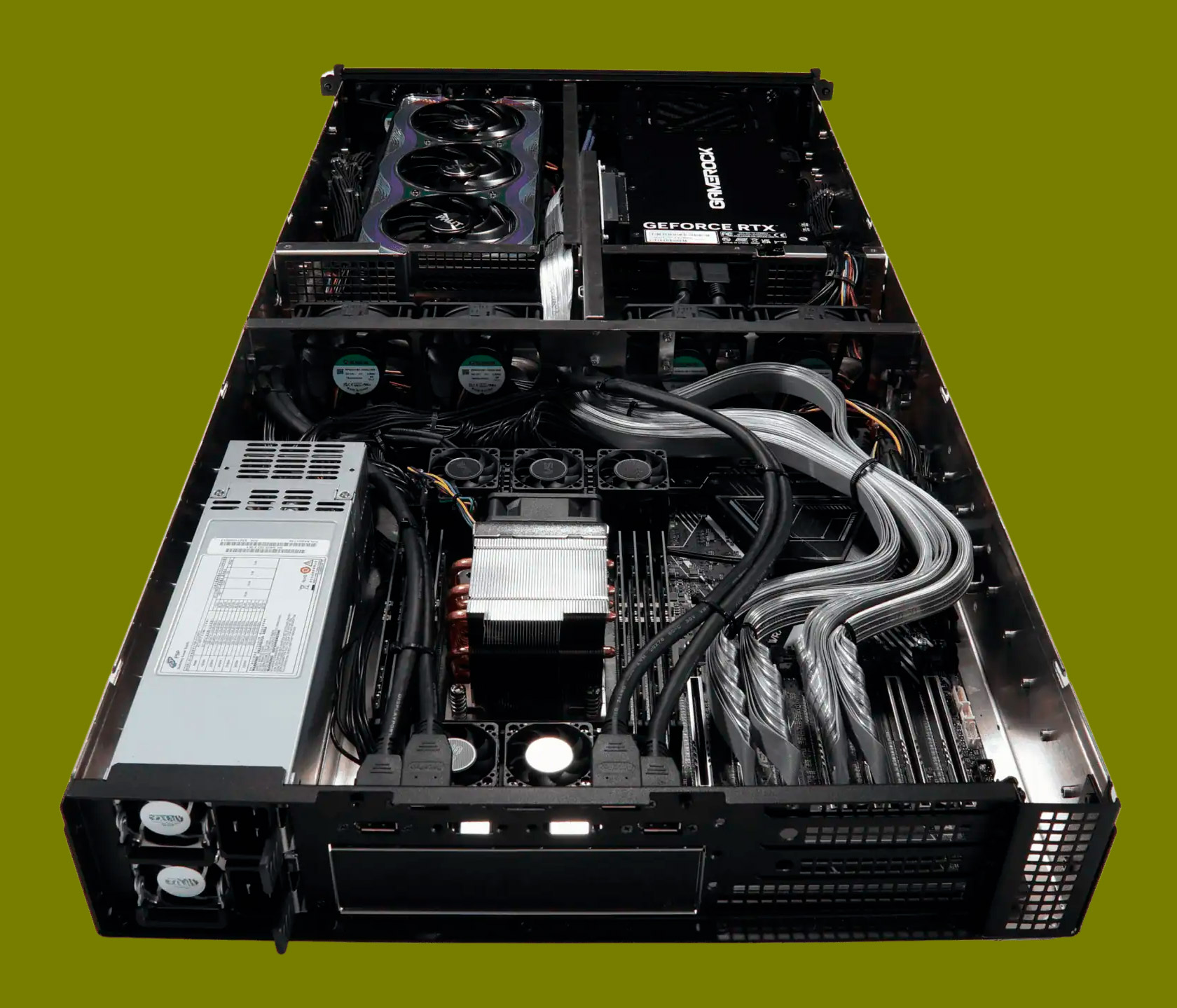
UK-manufactured 2U Q-Power offers firms an on-premise alternative to premium cloud AI services G2 Digital, a UK specialist in custom-built rack-mount computers, has launched the 2U Q-Power, a high-performance GPU server designed for complex AI workloads and rendering. The system can accommodate up to four dual slot Nvidia RTX GPUs, offering twice the capacity of most conventional 2U servers and greater computing density within a rack. This is made possible by a custom chassis design that mounts the GPUs horizontally, parallel to the motherboard. When configured with four Nvidia RTX Pro 6000 Blackwell Max-Q GPUs, the Q-Power delivers 384 GB of combined GPU memory, enabling organisations to run demanding AI workloads entirely on-site. This includes large language models (LLMs) with 70 billion parameters at full precision, as well as significantly larger models using lower-precision formats and quantisation.
Artificial intelligence companies are turning to architects and other AEC firms in search of data. As tech enterprises seek to build AI models and agents to perform industry-specific tasks, such as reviewing drawings and writing RFI responses, architecture firms are being approached by businesses offering money in return for access to private data. “Architects, have you seen this?” asked USC adjunct professor Simon Ha in a LinkedIn post . “This AI company is offering to pay six figures for your CAD files, including revisions and markups, to train AI models on how design work gets done.” Ha’s post included a screenshot of a social media post by a company, Nyne.ai, describing itself as “the data factory for AI,” which said, “You’ve got 3 years of CAD files doing nothing. We’ll pay you six figures for them.” “This raises serious questions about copyright and ownership of instruments of service,” Ha added.
For years, accuracy gave contractors an advantage that wasn't easy to replicate. Miss work in a takeoff, and a contractor could win a job at a price that didn't cover its costs. Count the same work twice, and the bid could be too high to win. Good estimators built careers on getting those details right, and firms built reputations on the strength of their estimating teams. Now AI is making that advantage easier to buy. Today's takeoff tools can read plans and return quantities in a fraction of the time it would take an estimator. The BuiltWorlds 2026 Preconstruction Benchmarking Report found that estimating tools still in pilots last year have largely gone into full deployment. As reliable counts become easier to obtain, being the firm that counts best starts to matter less.
Enscape 4.22 integrates Veras 2.0 more closely into the visualisation workflow, alongside new AI tools for design exploration and asset creation. Chaos has enhanced the integration between its Enscape real-time visualisation software and AI visualisation tool Veras 2.0, bringing AI-powered design exploration directly into the Enscape interface. The update aims to help architects incorporate AI more easily into their existing workflows, generate design variations and experiment with different materials and moods. Launching today as part of Enscape 4.22, the integration removes the need to bring up a separate Veras window, allowing architects to access AI rendering tools directly within Enscape. New AI video models also offer additional ways to visualise and communicate design ideas.
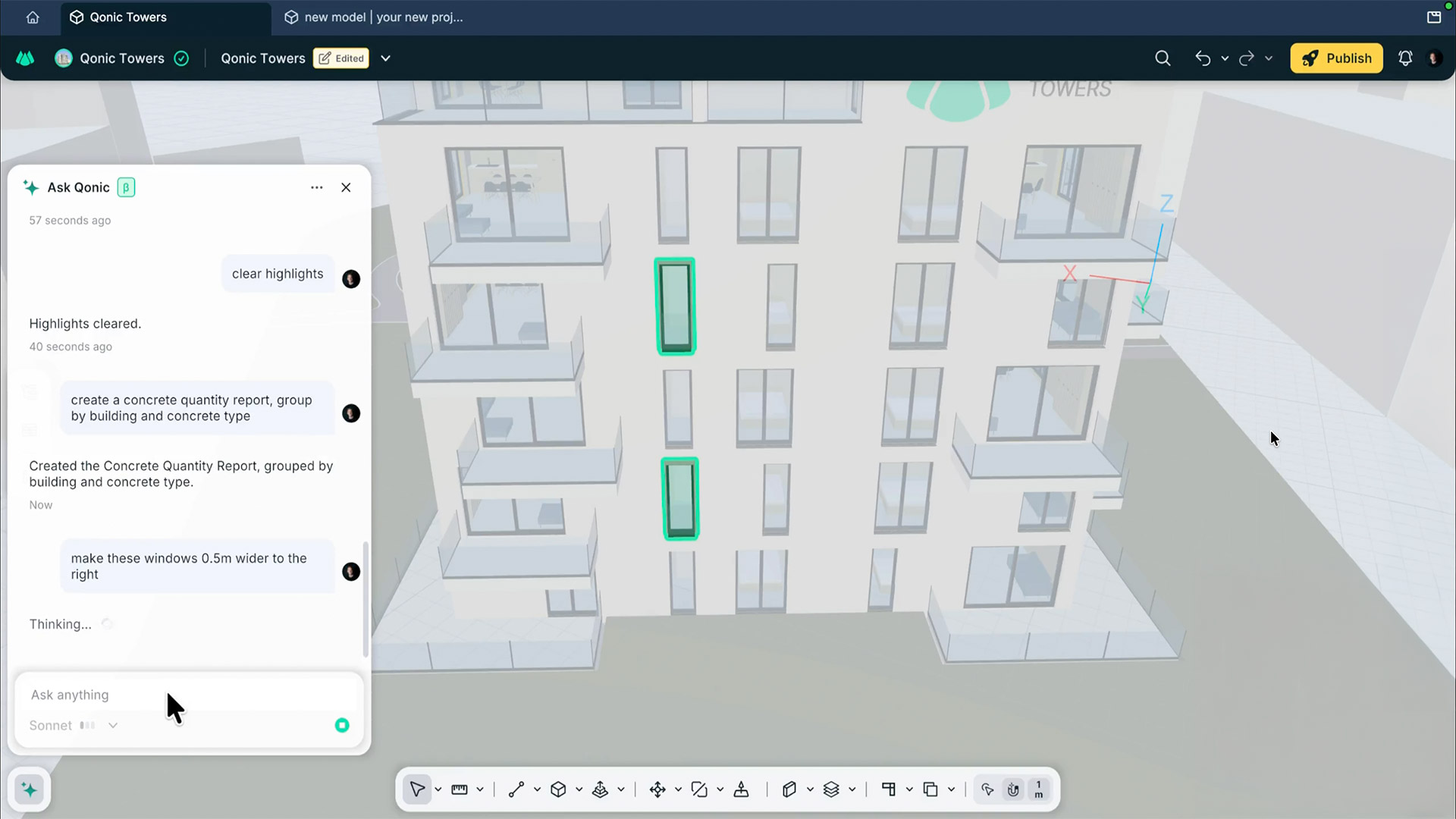
AI agents work directly inside the model, letting users find, check, fix and create BIM data using plain language Qonic has introduced Qonic AI, a collection of agents built into its cloud-based, collaborative BIM modelling platform. Qonic AI works directly inside the BIM model, rather than sitting alongside it. Qonic has also launched an MCP server, which lets users connect their own AI assistant to the platform. Inside Qonic, through the “Ask Qonic” chatbot, users describe what they want in plain language, and Qonic’s agents find, check and update elements using the platform’s own tools. Tasks include completing missing properties, building reports and editing geometry. “Anything you can do in Qonic in terms of geometry and data creation, editing, and manipulation can be done through prompting,” said Qonic’s Jacob De Sutter.
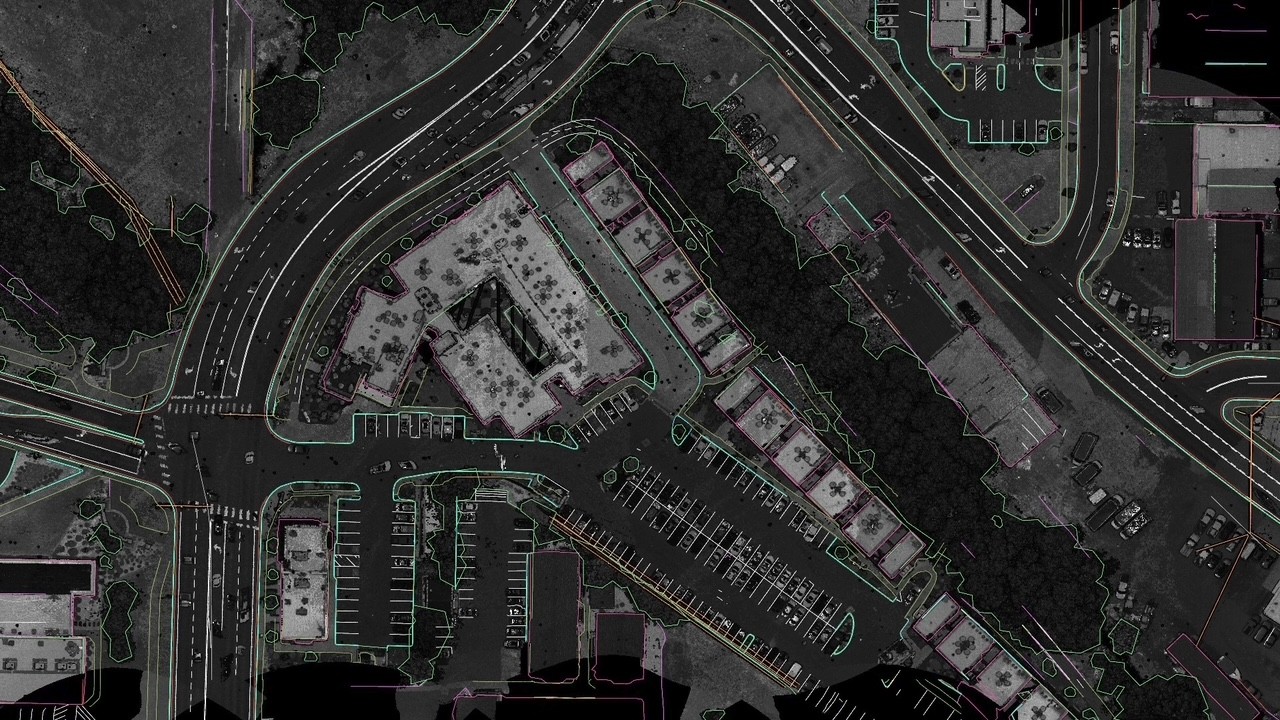
AI CAD software combines feature extraction, point cloud editing and surface modelling for aerial survey workflows Mach9 has extended its web-based AI CAD software for civil engineering enabling it to process aerial LiDAR and photogrammetry -derived datasets from drones, helicopters and aircraft. Previously focused on ground-based scanning, the software can now extract features from aerial point clouds, classify points and build surfaces for civil engineering and GIS applications. Mach9 says its AI can produce an initial draft in hours, which survey teams then check and edit before delivery. The development addresses a familiar problem in reality capture: collecting data is often considerably faster than producing useful engineering drawings from it. Users upload point clouds and orthomosaic imagery, then work through extraction, editing and surface creation within the same application.
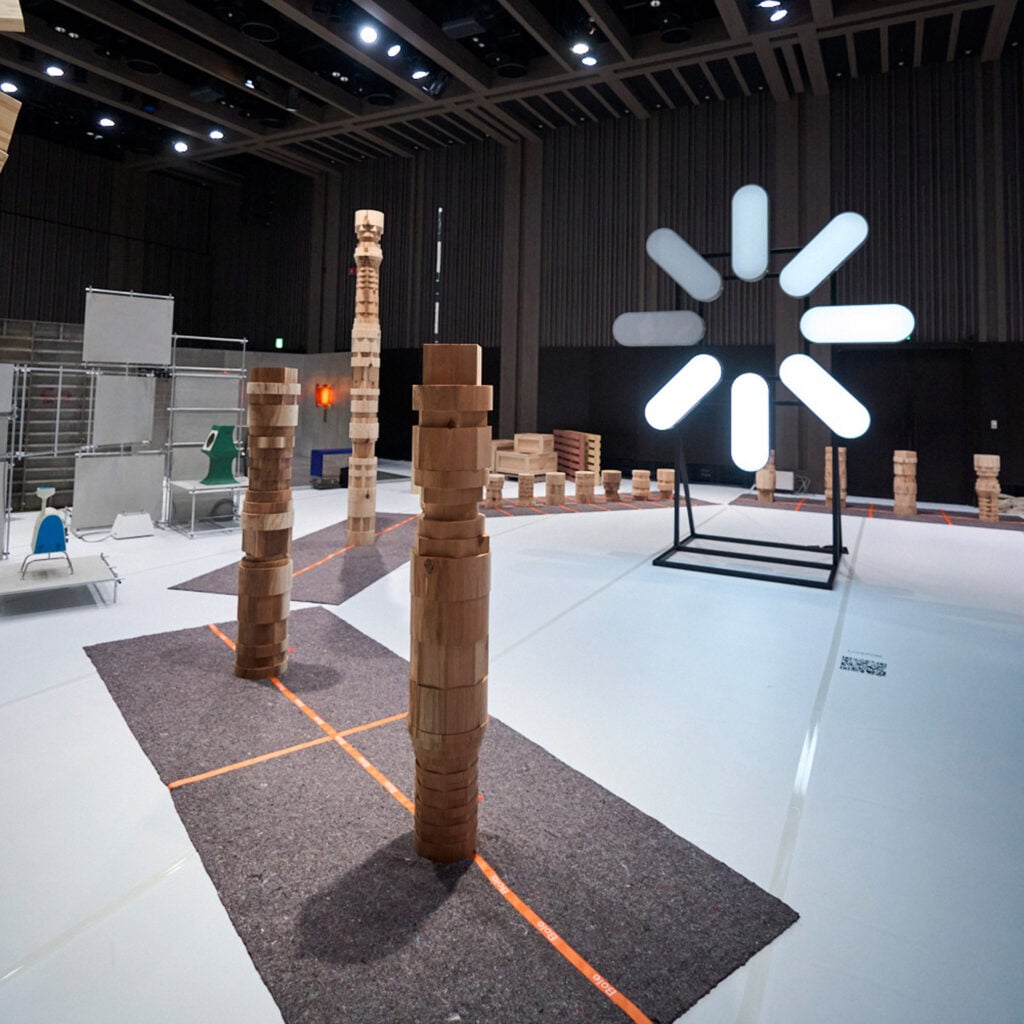
The second edition of young designers' exhibition Alter has opened in central Tokyo , featuring a glowing lung-like lamp and Japanese cedar stools made from every part of the log. Alter is being held at Nihonbashi Mitsu Hall during the 10th iteration of Designart Tokyo , which is ongoing across the Japanese capital. The show brings together work from 75 international creators, mostly in their 20s or 30s, united by a desire to "re-examine the value of product design" in an industry that the exhibitors say is growing increasingly rigid in its output. Among the offerings on display is a group show of texture-heavy design pieces curated by Dutch designer Tim Teven. Under the title At First Contact, it includes a bright green vessel by French designer Audrey Large . Complete with protruding, tentacle-like embellishments, the vase is typical of Large's otherworldly style.
Guides AI agent through tasks in Revit, AutoCAD, 3ds Max and more, with “clear steps” for doing the work and checking the result Autom8Labs has released 22 free MCP Skills, which work alongside the company’s relevant MCP Connectors for Revit, AutoCAD, Navisworks, Grasshopper, MicroStation, 3ds Max, Rhino, Civil 3D and Advance Steel. Rather than simply telling an AI agent what to do, each MCP skill guides it through the steps an experienced professional would follow. “Giving an AI agent access to a design application doesn’t automatically mean it knows the best way to work in it,” said James Gray, Autom8Labs. “The MCP Connectors give your AI agent the tools. Skills give it the method.”
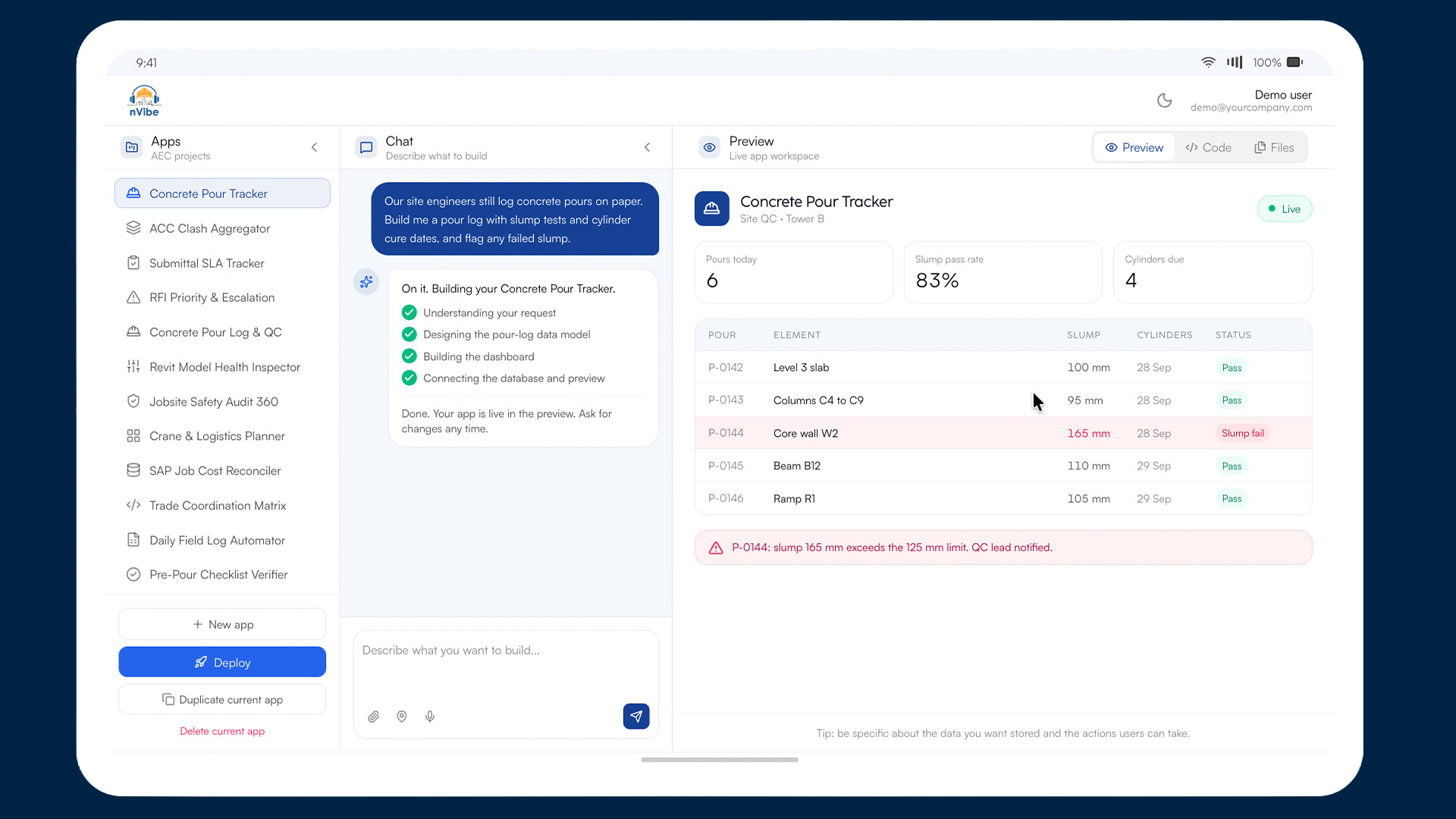
AEC professionals describe the workflow and AI application platform builds the app nCircle Tech has launched nVibe, an AI-powered development platform designed specifically to help AEC professionals turn ideas into working applications without needing coding skills. Domain experts, including site managers, project engineers and VDC leads, can describe a workflow in plain language, and nVibe builds the application within a sandboxed environment designed to give IT teams control over security, permissions and deployment. According to nCircle Tech, nVibe differs from general-purpose AI coding tools through its built-in understanding of AEC terminology and workflows. This includes concepts such as Work Breakdown Structure (WBS) codes, CSI MasterFormat, RFIs, submittals and LoD 100–500.
With AI, making AEC software is easy, but making it safe, supportable and accountable is another matter entirely. AEC Magazine spoke with Igor Tsinman, president and CEO of AMC Bridge, about the opportunities, risks and responsibilities of AI-driven software development Inside most large AEC firms there is now a layer of software nobody commissioned. AI coding tools have let architects, engineers, and estimators build working applications in days. The result is a growing estate of vibe-coded utilities with no documentation, no named owner, and in some cases write access to live project models. This follow a familiar patten. A decade ago, Dynamo and Grasshopper bred the same culture of personal scripts, but now the volume and speed are new, and so is the proximity to production data, client information, and contractual output.
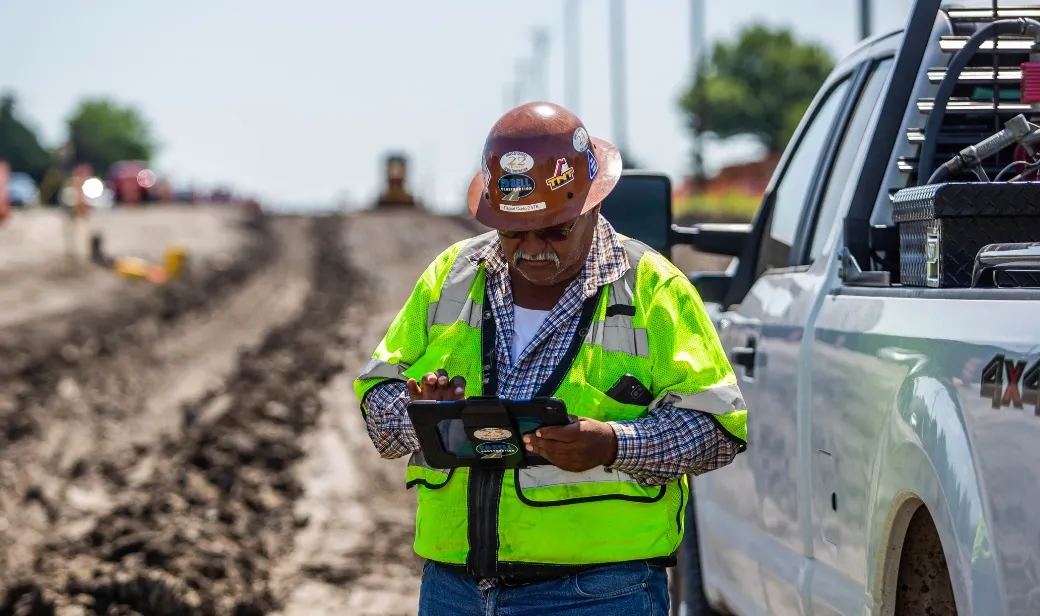
It's not exactly a hot take to state that AI in construction is no longer a pilot project. In 2026, AI assistants on jobsites are answering questions in plain language and taking real steps on a contractor's behalf. This is quickly becoming the baseline across estimating, field operations, fleet management and all the reporting that comes with it. Many contractors now find themselves in an awkward spot. The upside is faster bids, fewer missed line items and less time spent retyping yesterday's logs. However, these same AI tools touch the numbers a company bids, bills and gets paid on, so caution is good business. Also, every vendor promises speed, because it's easy to demo, but trust is what protects margins. Just asking these five questions before pulling the trigger on an AI solution can drastically aid your evaluation process. 1. What data is it built on?