Skip to content

AI+AEC in News · Construction Dive

Construction AI: Here are 5 questions to ask before you buy

Excerpt from Construction Dive

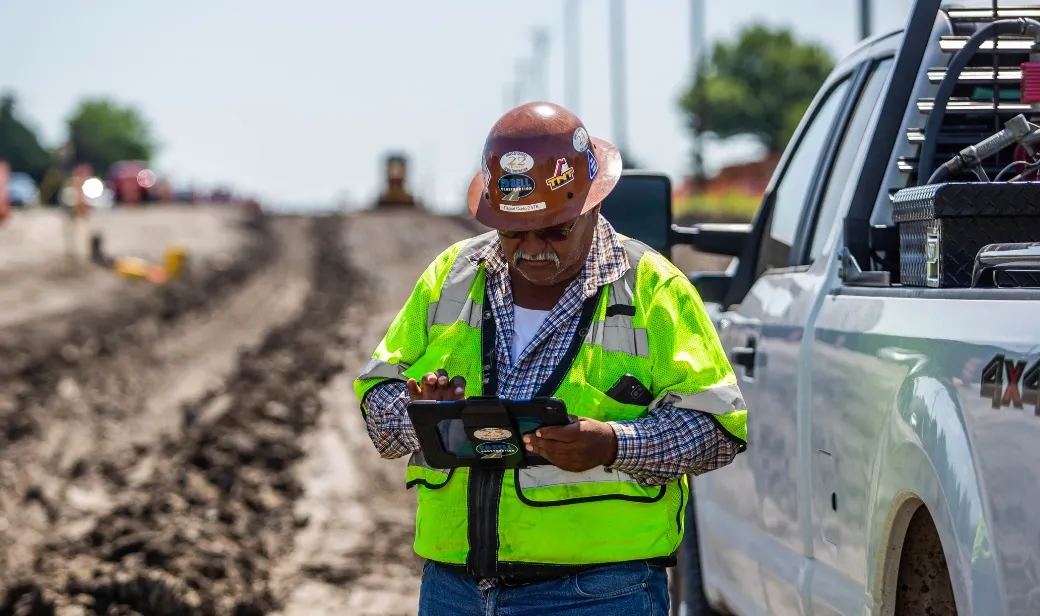
It's not exactly a hot take to state that AI in construction is no longer a pilot project. In 2026, AI assistants on jobsites are answering questions in plain language and taking real steps on a contractor's behalf. This is quickly becoming the baseline across estimating, field operations, fleet management and all the reporting that comes with it. Many contractors now find themselves in an awkward spot. The upside is faster bids, fewer missed line items and less time spent retyping yesterday's logs. However, these same AI tools touch the numbers a company bids, bills and gets paid on, so caution is good business. Also, every vendor promises speed, because it's easy to demo, but trust is what protects margins. Just asking these five questions before pulling the trigger on an AI solution can drastically aid your evaluation process. 1. What data is it built on?

Published by Construction Dive ·

Read the full article on Construction Dive (opens in a new tab)
Image: Construction Dive

Image: Construction Dive, shown from the publisher’s website.

How can your firm use this?

CloudBrain helps architecture, engineering and construction firms in India turn developments like this into working tools. Related service:

Custom AI tools & agentsAI tools and agents built around your own data and processes.

Topics

The headline and excerpt are from Construction Dive, which owns them; CloudBrain is not affiliated with Construction Dive. Read the original article (opens in a new tab) · All AI+AEC news
  • Dezeen ·

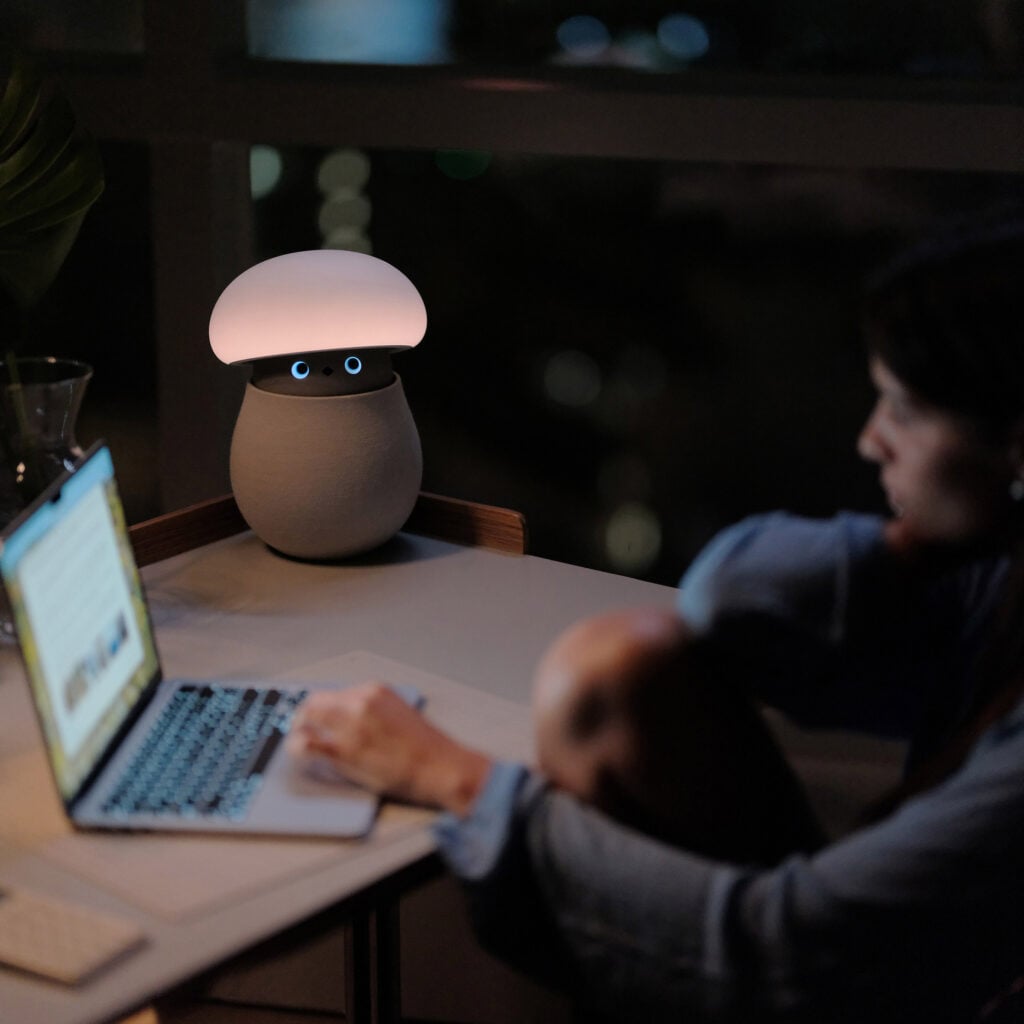
    Mori AI home robot "resembles a contemporary table lamp"

    Robotics startup OKA has released a lamp-shaped artificial intelligence robot designed to offer companionship by greeting people, dancing to music and playing nature sounds. Mori by OKA (One Kind Artificat) is 26.4 centimetres tall, with a cloth-covered base and an illuminated, dome-shaped head that lifts to reveal cartoonish eyes that blink and swivel. According to OKA, Mori "resembles a contemporary table lamp" and was designed to "help people feel calmer, more at ease, and more connected to the world around them". "We wanted Mori to feel like a familiar object in the home rather than an unfamiliar machine," OKA told Dezeen. "Many robots look technical, mechanical, or overly human, while a lamp is something people already live with comfortably." Gallery Previous Next Gallery Close The robot exists in two modes: a lamp setting, when it's compact and at rest, and a responsive setting, when the head is lifted and tilted.

  • AEC Magazine ·

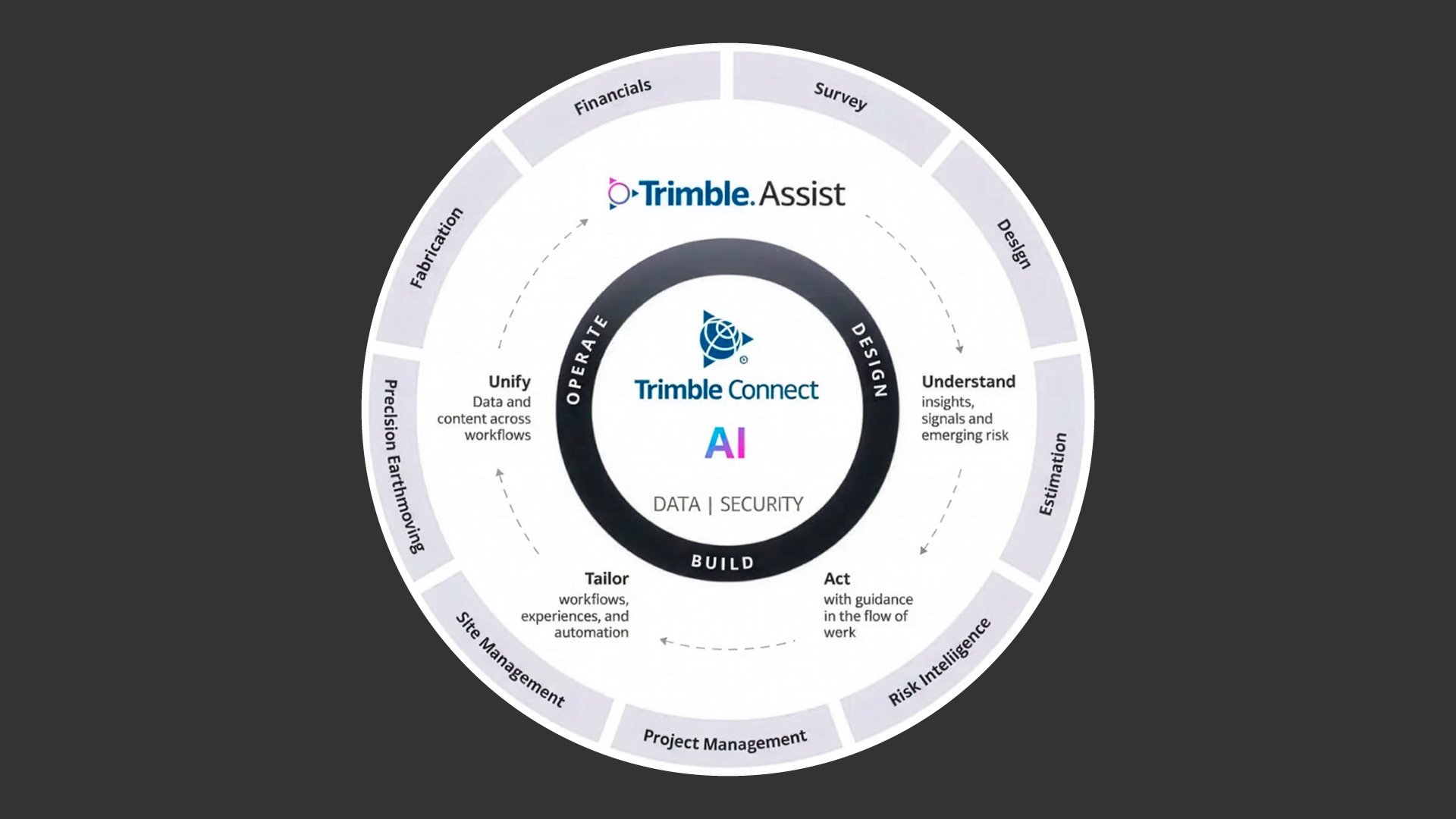
    Trimble embeds AI across AECO

    Trimble Connect platform introduces AI agents and automation to improve project coordination, manage risk and streamline workflows Trimble has embedded AI within Trimble Connect , expanding the platform beyond its traditional role as a common data environment (CDE) to connect site information with design, cost and operational workflows. The new capabilities are intended to help teams identify and mitigate risks across the project lifecycle, while keeping human judgement at the centre of decision-making. Unveiled at Trimble’s Dimensions User Conference, the AI capabilities span design, construction and project operations. In design, they include generating architectural options using live as-built point-cloud data, converting natural-language prompts into constructible structural models, and automatically classifying scanned point clouds into structural elements. For construction teams, applications include AI-powered diagnostics for machine-control systems, converting 360-degree site walk videos into 3D point clouds, and voice-driven site inspections that automatically transcribe observations and link them to project drawings.

  • AEC Magazine ·

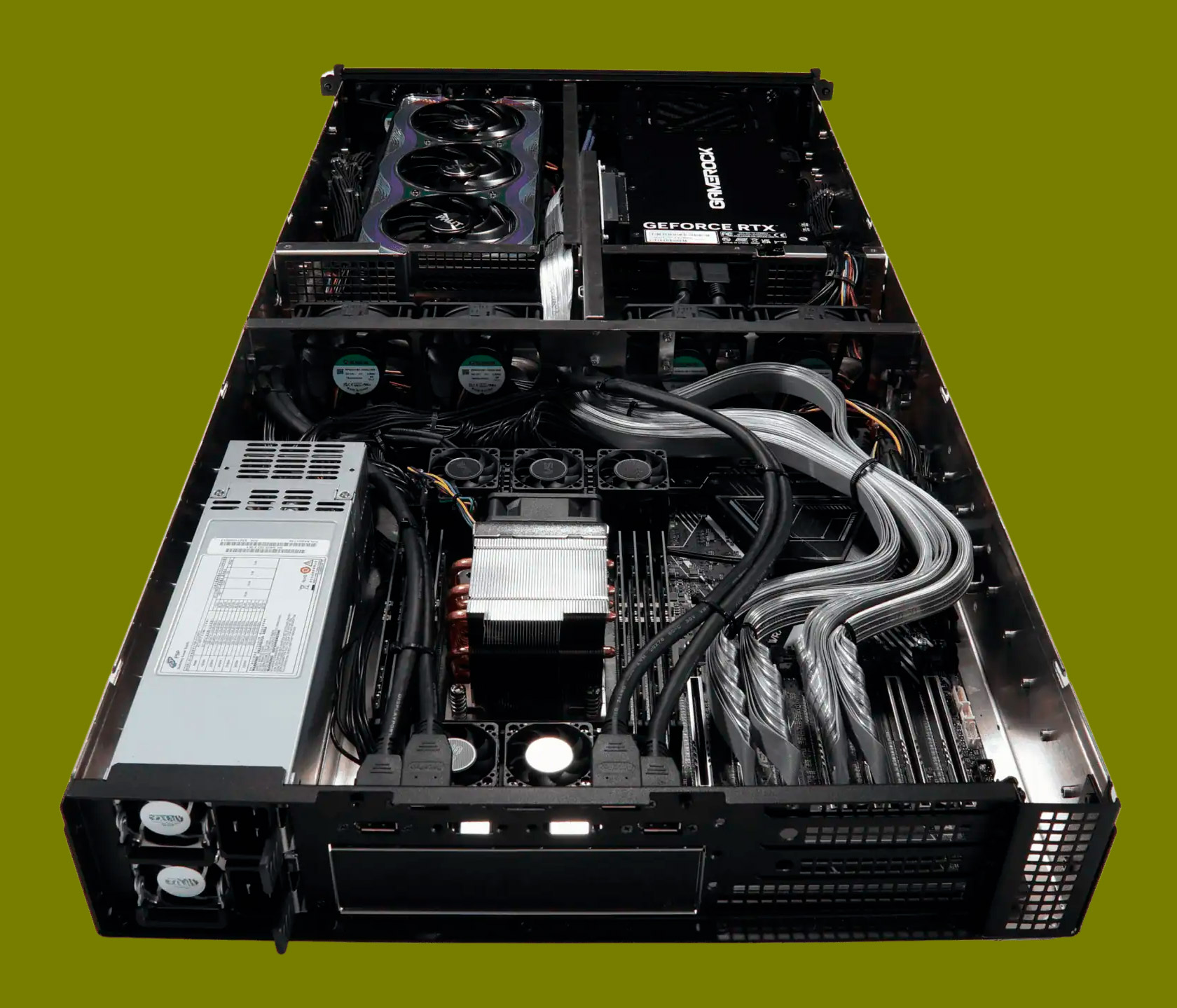
    G2 Digital launches quad-GPU 2U server

    UK-manufactured 2U Q-Power offers firms an on-premise alternative to premium cloud AI services G2 Digital, a UK specialist in custom-built rack-mount computers, has launched the 2U Q-Power, a high-performance GPU server designed for complex AI workloads and rendering. The system can accommodate up to four dual slot Nvidia RTX GPUs, offering twice the capacity of most conventional 2U servers and greater computing density within a rack. This is made possible by a custom chassis design that mounts the GPUs horizontally, parallel to the motherboard. When configured with four Nvidia RTX Pro 6000 Blackwell Max-Q GPUs, the Q-Power delivers 384 GB of combined GPU memory, enabling organisations to run demanding AI workloads entirely on-site. This includes large language models (LLMs) with 70 billion parameters at full precision, as well as significantly larger models using lower-precision formats and quantisation.

Talk through your AI plans with an architect

Book a strategy call. We'll look at where AI can save your team time, what it will take, and what to leave alone.