
Skip to content

AI+AEC in News

Construction technology: AI news

News on AI on the construction side: estimating and takeoff, site monitoring, drones and robotics, scheduling, and how contractors are adopting these tools.

14 stories

  • Dezeen ·

    Mori AI home robot "resembles a contemporary table lamp"

    Robotics startup OKA has released a lamp-shaped artificial intelligence robot designed to offer companionship by greeting people, dancing to music and playing nature sounds. Mori by OKA (One Kind Artificat) is 26.4 centimetres tall, with a cloth-covered base and an illuminated, dome-shaped head that lifts to reveal cartoonish eyes that blink and swivel. According to OKA, Mori "resembles a contemporary table lamp" and was designed to "help people feel calmer, more at ease, and more connected to the world around them". "We wanted Mori to feel like a familiar object in the home rather than an unfamiliar machine," OKA told Dezeen. "Many robots look technical, mechanical, or overly human, while a lamp is something people already live with comfortably." Gallery Previous Next Gallery Close The robot exists in two modes: a lamp setting, when it's compact and at rest, and a responsive setting, when the head is lifted and tilted.
  • AEC Magazine ·

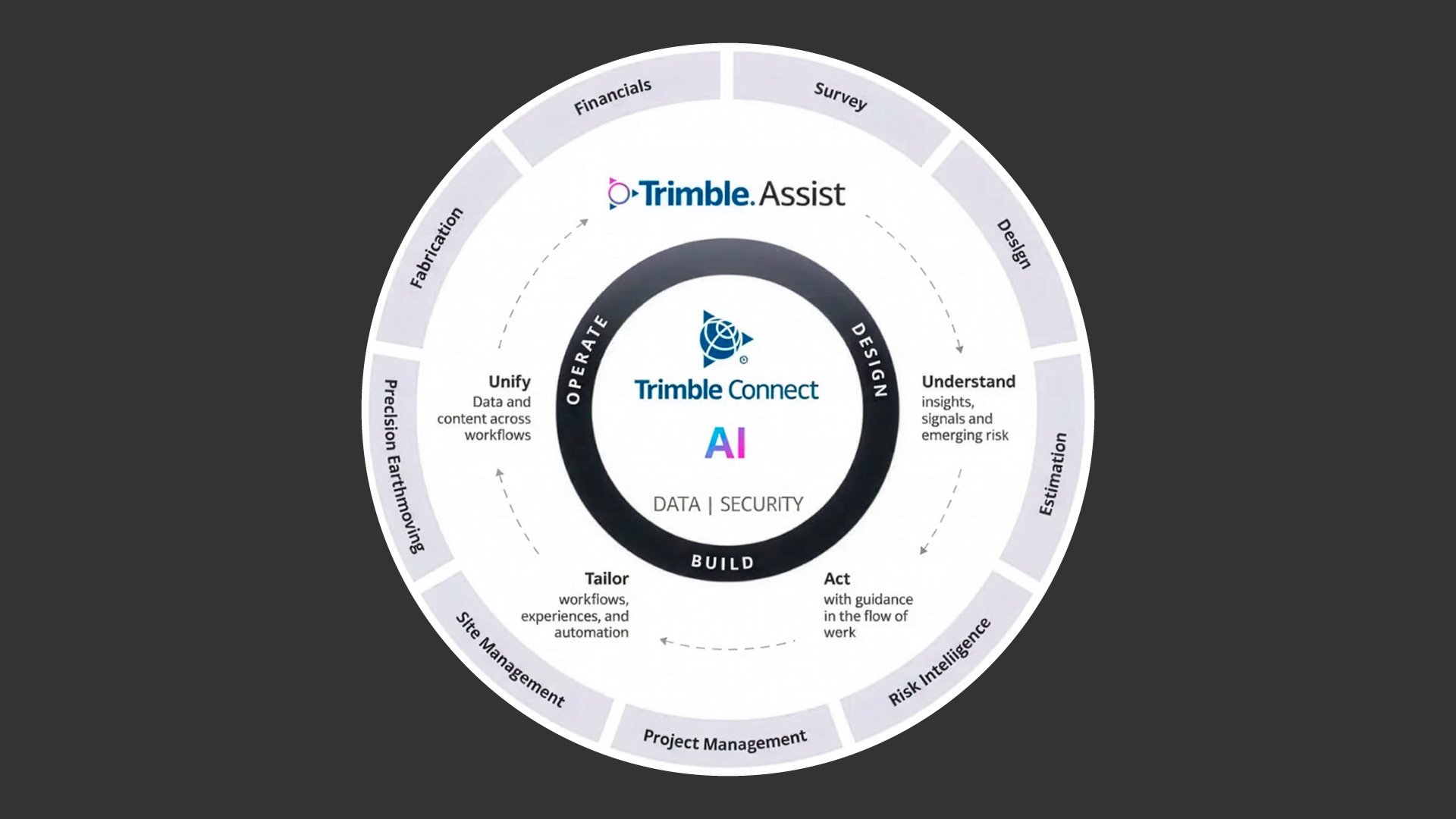
    Trimble embeds AI across AECO

    Trimble Connect platform introduces AI agents and automation to improve project coordination, manage risk and streamline workflows Trimble has embedded AI within Trimble Connect , expanding the platform beyond its traditional role as a common data environment (CDE) to connect site information with design, cost and operational workflows. The new capabilities are intended to help teams identify and mitigate risks across the project lifecycle, while keeping human judgement at the centre of decision-making. Unveiled at Trimble’s Dimensions User Conference, the AI capabilities span design, construction and project operations. In design, they include generating architectural options using live as-built point-cloud data, converting natural-language prompts into constructible structural models, and automatically classifying scanned point clouds into structural elements. For construction teams, applications include AI-powered diagnostics for machine-control systems, converting 360-degree site walk videos into 3D point clouds, and voice-driven site inspections that automatically transcribe observations and link them to project drawings.

  • AEC Magazine ·

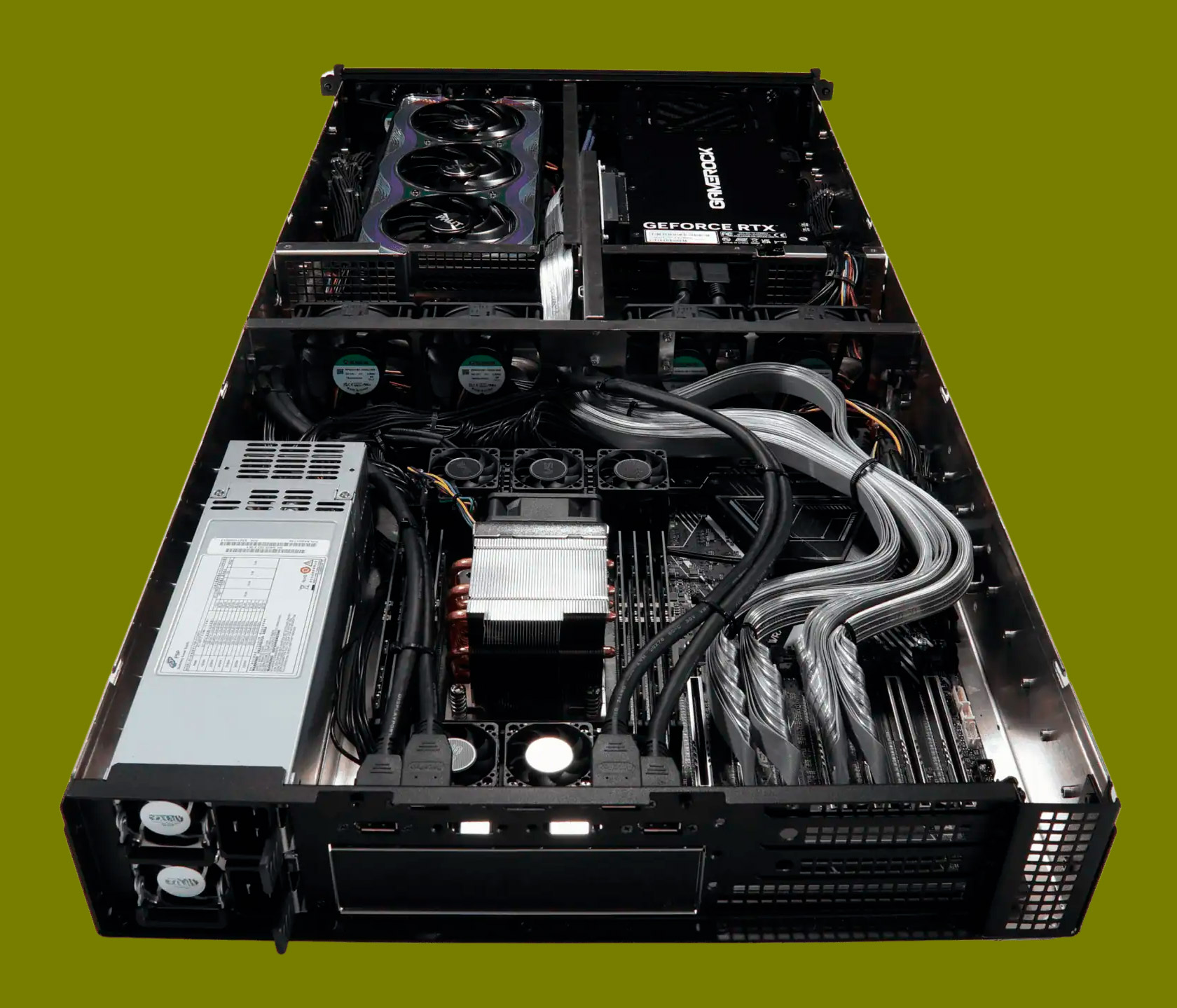
    G2 Digital launches quad-GPU 2U server

    UK-manufactured 2U Q-Power offers firms an on-premise alternative to premium cloud AI services G2 Digital, a UK specialist in custom-built rack-mount computers, has launched the 2U Q-Power, a high-performance GPU server designed for complex AI workloads and rendering. The system can accommodate up to four dual slot Nvidia RTX GPUs, offering twice the capacity of most conventional 2U servers and greater computing density within a rack. This is made possible by a custom chassis design that mounts the GPUs horizontally, parallel to the motherboard. When configured with four Nvidia RTX Pro 6000 Blackwell Max-Q GPUs, the Q-Power delivers 384 GB of combined GPU memory, enabling organisations to run demanding AI workloads entirely on-site. This includes large language models (LLMs) with 70 billion parameters at full precision, as well as significantly larger models using lower-precision formats and quantisation.

  • Construction Dive ·

    If every contractor has the same AI, what are they actually competing on?

    For years, accuracy gave contractors an advantage that wasn't easy to replicate. Miss work in a takeoff, and a contractor could win a job at a price that didn't cover its costs. Count the same work twice, and the bid could be too high to win. Good estimators built careers on getting those details right, and firms built reputations on the strength of their estimating teams. Now AI is making that advantage easier to buy. Today's takeoff tools can read plans and return quantities in a fraction of the time it would take an estimator. The BuiltWorlds 2026 Preconstruction Benchmarking Report found that estimating tools still in pilots last year have largely gone into full deployment. As reliable counts become easier to obtain, being the firm that counts best starts to matter less.

  • AEC Magazine ·

    Mach9 adds aerial LiDAR and photogrammetry support

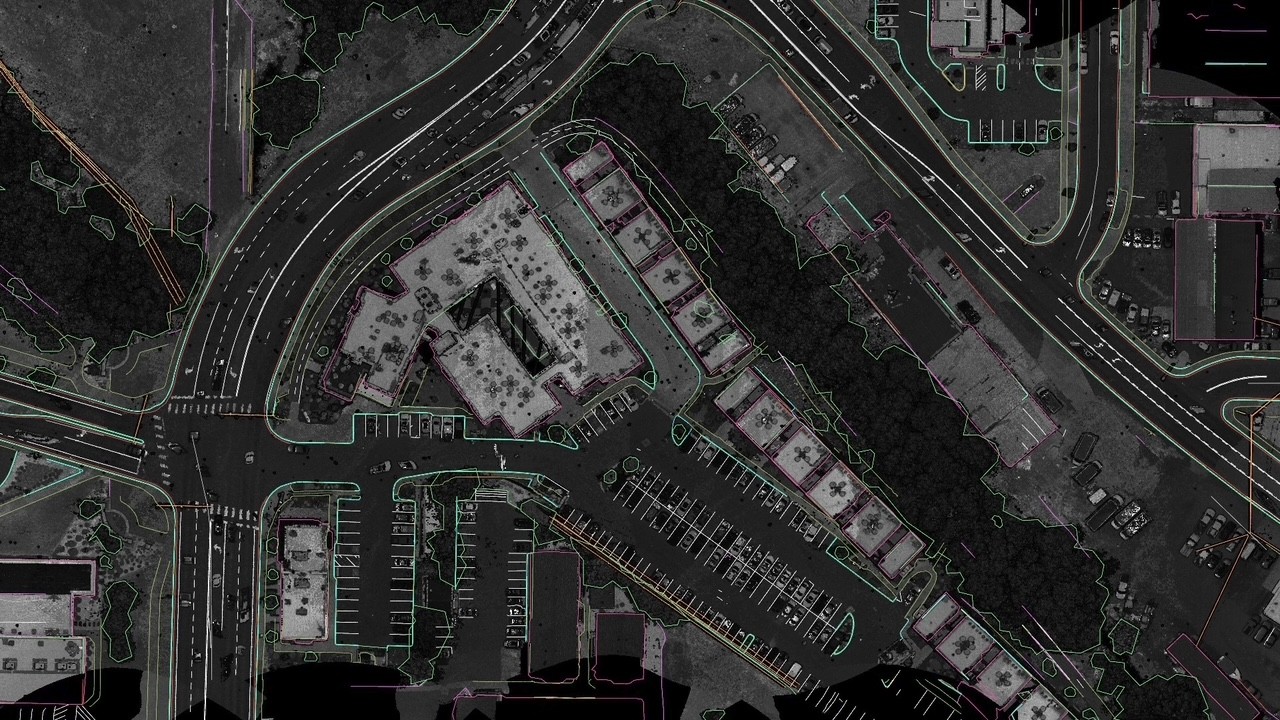
    AI CAD software combines feature extraction, point cloud editing and surface modelling for aerial survey workflows Mach9 has extended its web-based AI CAD software for civil engineering enabling it to process aerial LiDAR and photogrammetry -derived datasets from drones, helicopters and aircraft. Previously focused on ground-based scanning, the software can now extract features from aerial point clouds, classify points and build surfaces for civil engineering and GIS applications. Mach9 says its AI can produce an initial draft in hours, which survey teams then check and edit before delivery. The development addresses a familiar problem in reality capture: collecting data is often considerably faster than producing useful engineering drawings from it. Users upload point clouds and orthomosaic imagery, then work through extraction, editing and surface creation within the same application.

  • AEC Magazine ·

    nCircle Tech launches nVibe AI app builder

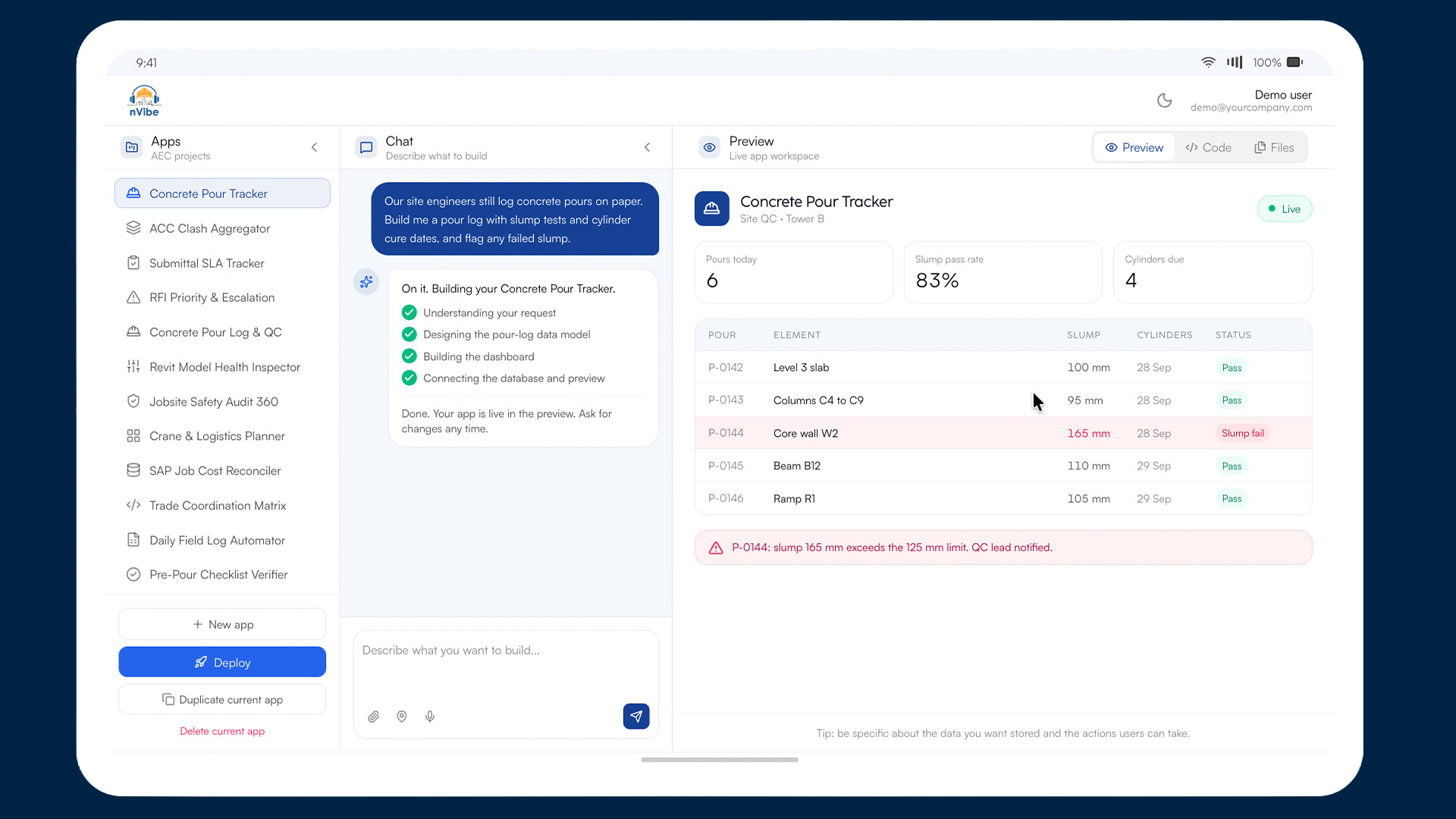
    AEC professionals describe the workflow and AI application platform builds the app nCircle Tech has launched nVibe, an AI-powered development platform designed specifically to help AEC professionals turn ideas into working applications without needing coding skills. Domain experts, including site managers, project engineers and VDC leads, can describe a workflow in plain language, and nVibe builds the application within a sandboxed environment designed to give IT teams control over security, permissions and deployment. According to nCircle Tech, nVibe differs from general-purpose AI coding tools through its built-in understanding of AEC terminology and workflows. This includes concepts such as Work Breakdown Structure (WBS) codes, CSI MasterFormat, RFIs, submittals and LoD 100–500.

  • AEC Magazine ·

    The home brew estate: Q&A with AMC Bridge

    With AI, making AEC software is easy, but making it safe, supportable and accountable is another matter entirely. AEC Magazine spoke with Igor Tsinman, president and CEO of AMC Bridge, about the opportunities, risks and responsibilities of AI-driven software development Inside most large AEC firms there is now a layer of software nobody commissioned. AI coding tools have let architects, engineers, and estimators build working applications in days. The result is a growing estate of vibe-coded utilities with no documentation, no named owner, and in some cases write access to live project models. This follow a familiar patten. A decade ago, Dynamo and Grasshopper bred the same culture of personal scripts, but now the volume and speed are new, and so is the proximity to production data, client information, and contractual output.

  • Construction Dive ·

    Construction AI: Here are 5 questions to ask before you buy

    It's not exactly a hot take to state that AI in construction is no longer a pilot project. In 2026, AI assistants on jobsites are answering questions in plain language and taking real steps on a contractor's behalf. This is quickly becoming the baseline across estimating, field operations, fleet management and all the reporting that comes with it. Many contractors now find themselves in an awkward spot. The upside is faster bids, fewer missed line items and less time spent retyping yesterday's logs. However, these same AI tools touch the numbers a company bids, bills and gets paid on, so caution is good business. Also, every vendor promises speed, because it's easy to demo, but trust is what protects margins. Just asking these five questions before pulling the trigger on an AI solution can drastically aid your evaluation process. 1. What data is it built on?

  • AEC Magazine ·

    Snaptrude Agent launches for BIM workflows

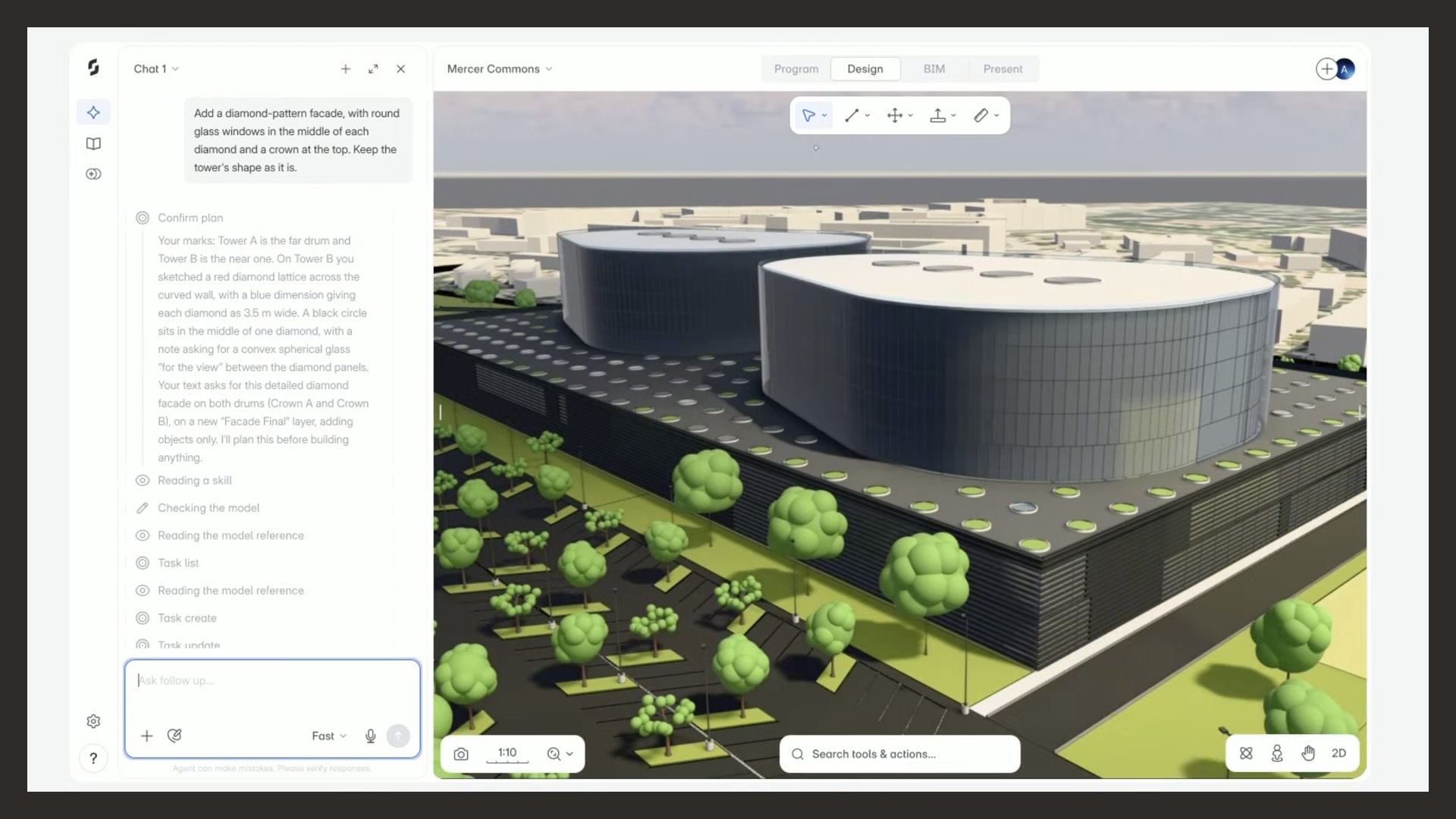
    AI agent supports workflows from early concept design to detailed BIM modelling, structural systems, MEP and construction documentation. Snaptrude has introduced Snaptrude Agent, an AI agent for its BIM platform designed to support teams from early concept studies to construction-ready LoD 400 models incorporating structure, mechanical, electrical and plumbing (MEP), and drawings. Users are said to retain control of the process: they give the Agent a prompt or problem, review its proposed plan, then approve it or provide further direction. Discover what’s new in technology for architecture, engineering and construction — read the latest edition of AEC Magazine Subscribe FREE here According to Snaptrude, the Agent can automate tasks across the design process, including concept modelling, detailed BIM modelling and construction documentation. It can generate multiple massing options from a site analysis, ranging from a handful of alternatives to hundreds.

  • Construction Dive ·

    Eyes in the sky, savings on the ground: AI drones take on construction’s data problem

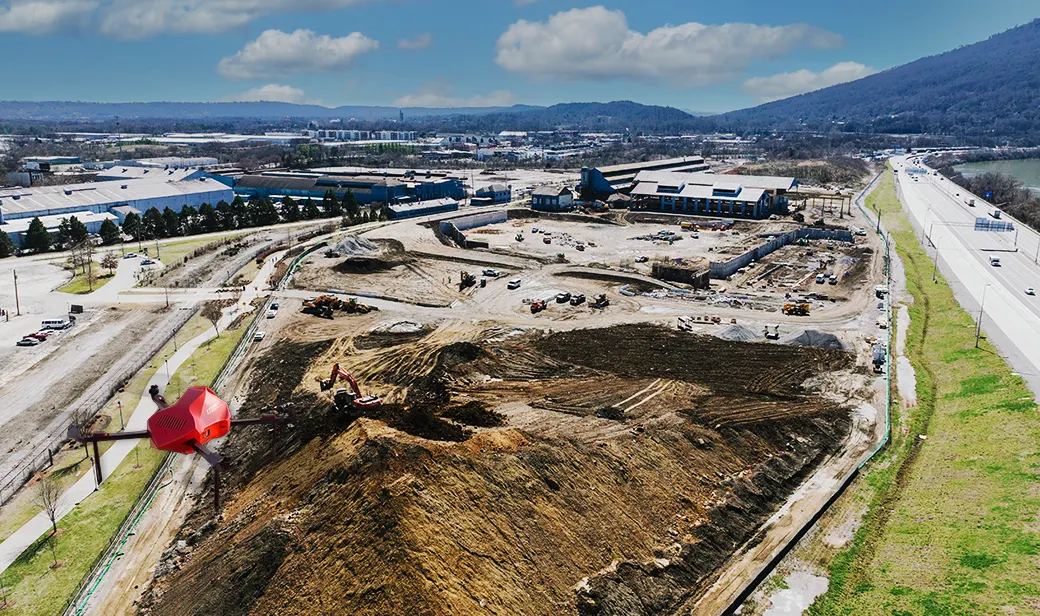
    The U.S. construction industry was valued at $2.2 trillion in 2025. Yet poor data cost the global industry an estimated $1.8 trillion every year . Rework, delays, and miscalculations leave contractors already working with thin margins and tight schedules overextended and clients frustrated. For anyone running a jobsite, the gap between what’s on the plans and what’s actually being built is a constant headache. But how do you keep an eye on everything, all the time, when you're already too busy making sure the job gets done? The answer is: you can't. But drones can. With Drone as a Service, AI-autonomous drones are the missing piece. The drones are equipped with 4K cameras, LiDAR, multispectral and thermal sensors, and ground-penetrating radar (GPR) scanners, giving contractors accurate site data when and where they need it, without sending crews into harm's way.

  • Construction Dive ·

    Newforma acquires Lumi AI, will incorporate into its tech

    Newforma, a construction information management technology provider, has acquired Lumi AI , an artificial intelligence startup, according to a Wednesday announcement. The terms of the transaction were not disclosed. With the move, Newforma will connect Toronto-based Lumi’s agentic AI into Vojo, Newforma’s AI assistant that lives on the company’s agentic framework, according to the announcement. Newforma will integrate the agent into its platforms that hold more than two decades of project data, which include RFIs, submittals and communication history. Lumi’s AI helps businesses use plain language queries to investigate and uncover patterns in their data. Going forward, planned capabilities for Vojo include natural language search and cross-project queries across project data, per the announcement. Newforma CEO Peter Cannone told Construction Dive via email that Lumi will not be accessible to non-Newforma customers.

  • Construction Dive ·

    AI reshapes construction teams more often than it cuts jobs: report

    Artificial intelligence is changing construction teams more often than shrinking them, according to a report from BRG. Among North American respondents, 46% changed team structures and 38% retrained employees, while 18% added headcount in certain areas and 11% reduced it because of AI, per the report. Over two-thirds of North American respondents invested at least $250,000 in AI over the previous two years, including 37% that spent $1 million or more, the survey found. Despite the widespread adoption and spend, 15% said they’d fully integrated the technology across projects and operations. Dive Insight: BRG surveyed 109 executives involved in AI implementation in July 2026, including 58 builders and 51 owners. Most findings reflect 65 North American respondents. Surveyed builders were mainly small- to mid-sized general contractors and construction managers; owners were primarily larger developers and real estate investment trusts.

  • Construction Dive ·

    Construction must preserve trades knowledge to know when AI is wrong

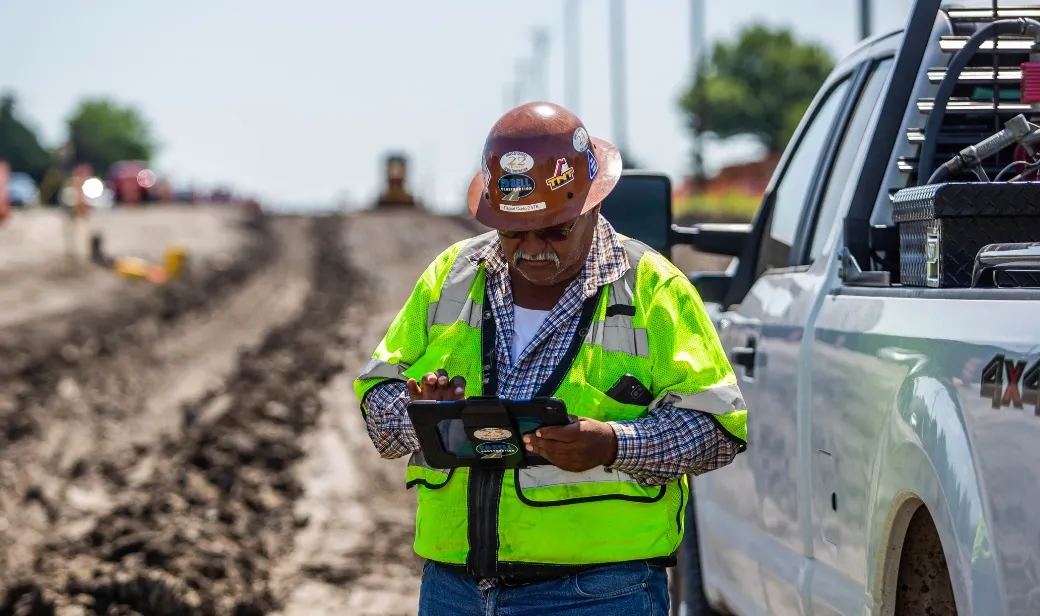
    Lance Mazzariello is a union carpenter and vice president of Specialty Services of New England. Opinions are the author’s own. There is a moment familiar to anyone who has spent time on a construction site. A younger tradesperson studies a drawing on a tablet. The dimensions are correct, the detail is clear, everything appears to work. An experienced journeyman looks at the same drawing, looks at the wall, and says, “That’s not going to work.” Most of the time, he’s right. How did he know? That question has been on my mind as construction races toward a technological future. I lead operations in union commercial construction in greater Boston, and, like most of our industry, we’re adopting technologies meant to solve problems that have plagued us for decades: inefficient planning, poor communication, labor shortages, rework, scheduling and stagnant productivity. Artificial intelligence is entering estimating and project management.

  • Construction Dive ·

    6 contech firms raise $154M in recent funding

    Last week, 3D-printing firm Icon raised $200 million in a Series D funding round. That eye-catching number represents investors’ faith in new ways of building and the desire to pump cash into the construction technology space. At the same time, contractors continue to turn to artificial intelligence. Myriad offerings continue to hit the market as firms hope to help general contractors manage processes that are typically time-consuming, fragmented or both. Here are six construction-focused tech firms that recently raised investor cash. Miter $40 million San Francisco-based Miter, which helps builders manage their workforce, has raised $40 million in a Series B funding round, according to a Sept. 30 announcement. Battery Ventures led the round, while existing investors Bessemer Venture Partners and Coatue also participated. Miter’s technology helps builders coordinate workforce management, field operations and project expenses, according to the announcement.

Want to apply this in your firm? See our Workflow automation service.

Talk through your AI plans with an architect

Book a strategy call. We'll look at where AI can save your team time, what it will take, and what to leave alone.